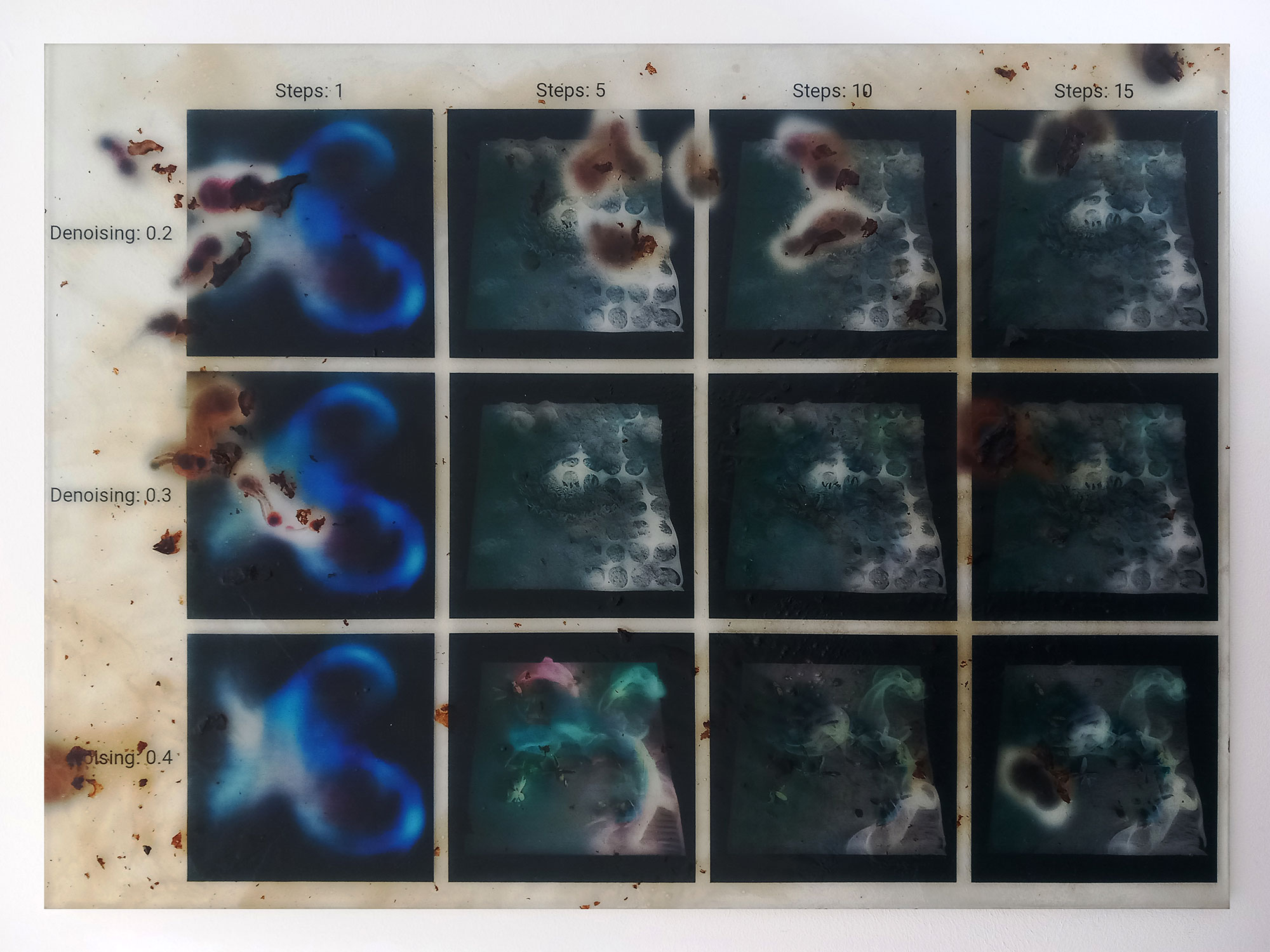
Nord Stream Generative AI (XY PLOT) UV Print on Bioplastic mounted on glass 2023

Installation View Kunstmuseum Bonn 2023
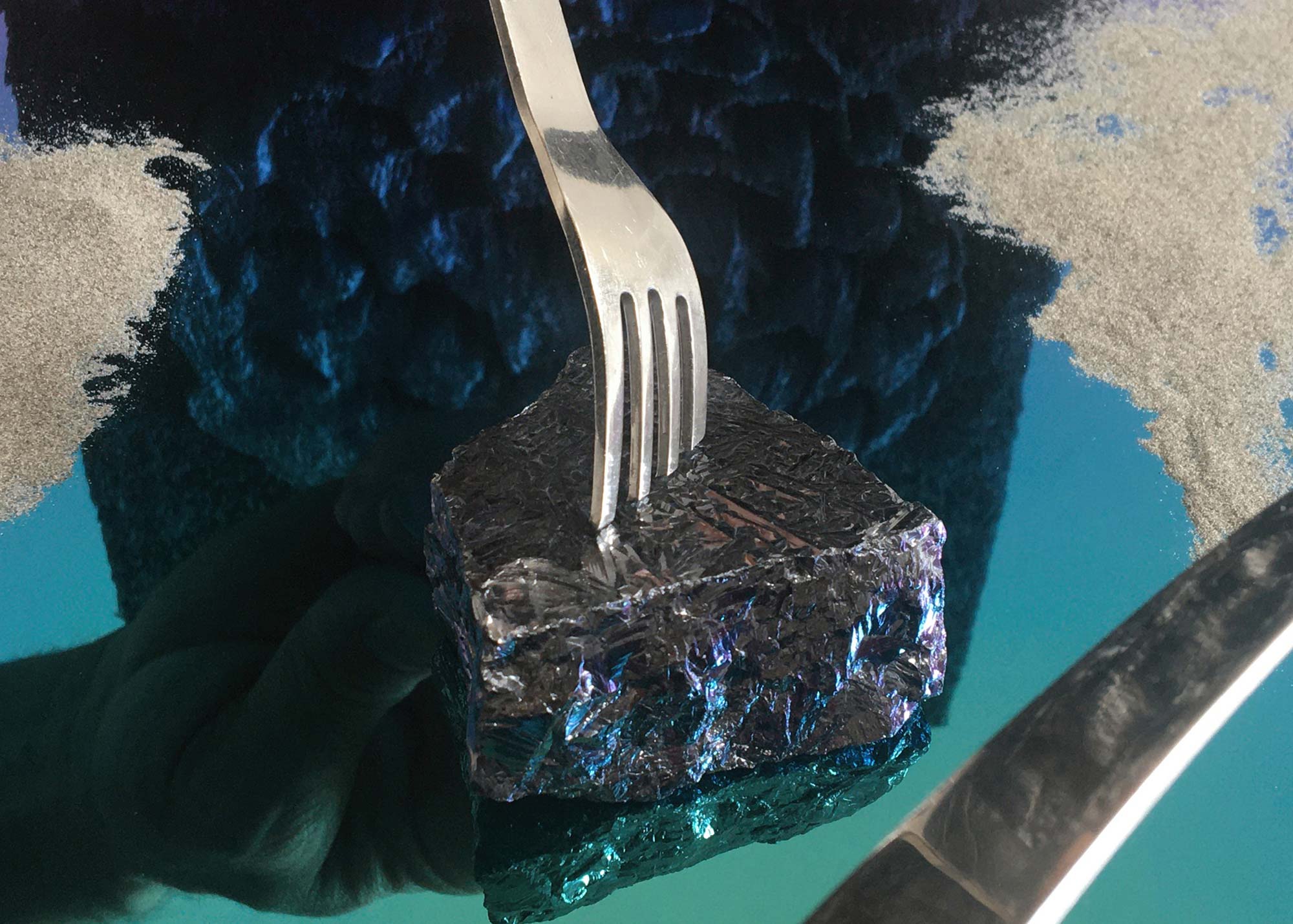
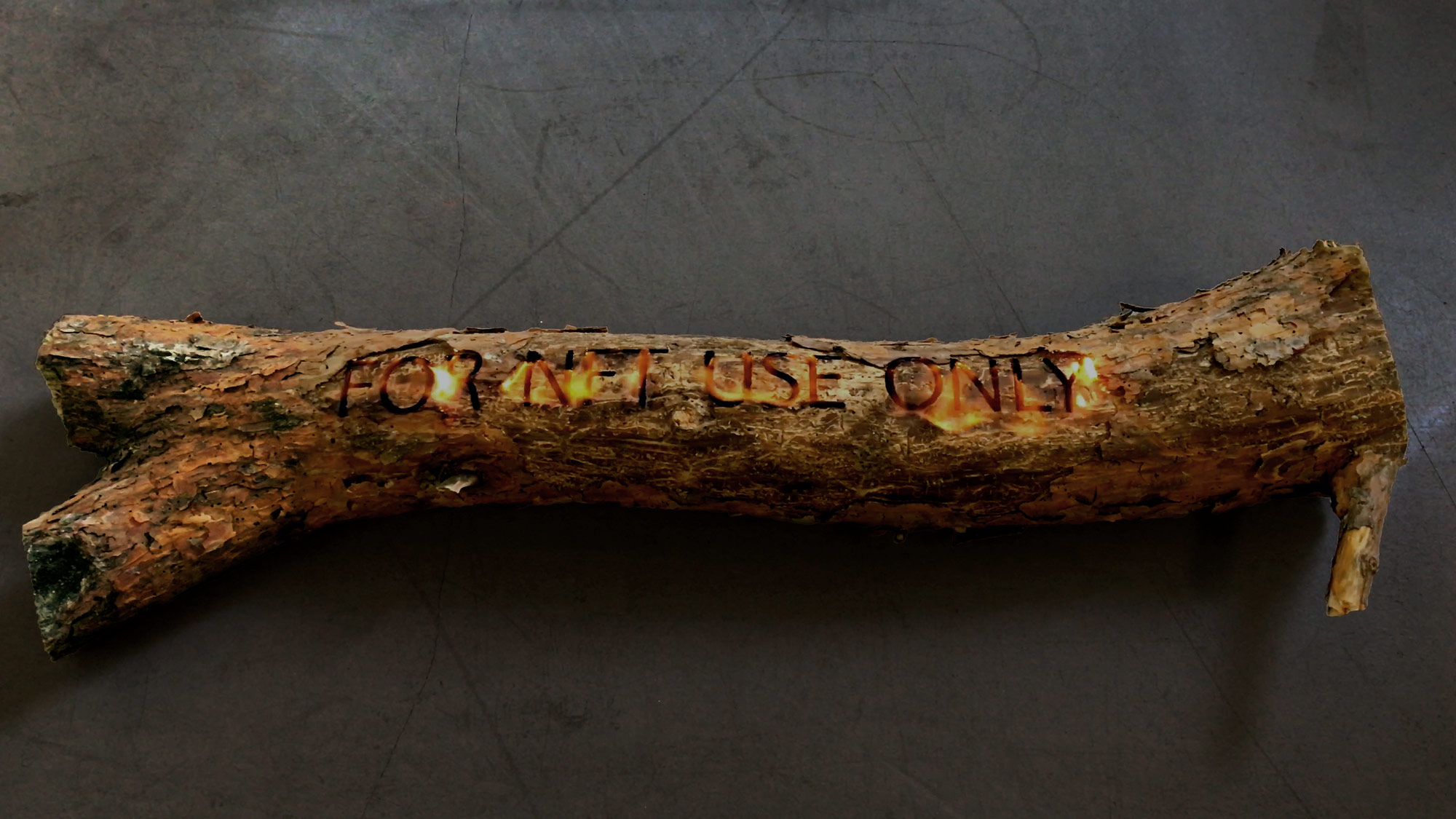
FOR NFT USE ONLY, NFT 2021
An animated GIF of the text “FOR NFT USE ONLY” carved on a log burning, is minted as NFT. Both the burning of the wood and the imminent NFT transaction(s) are irreversible.


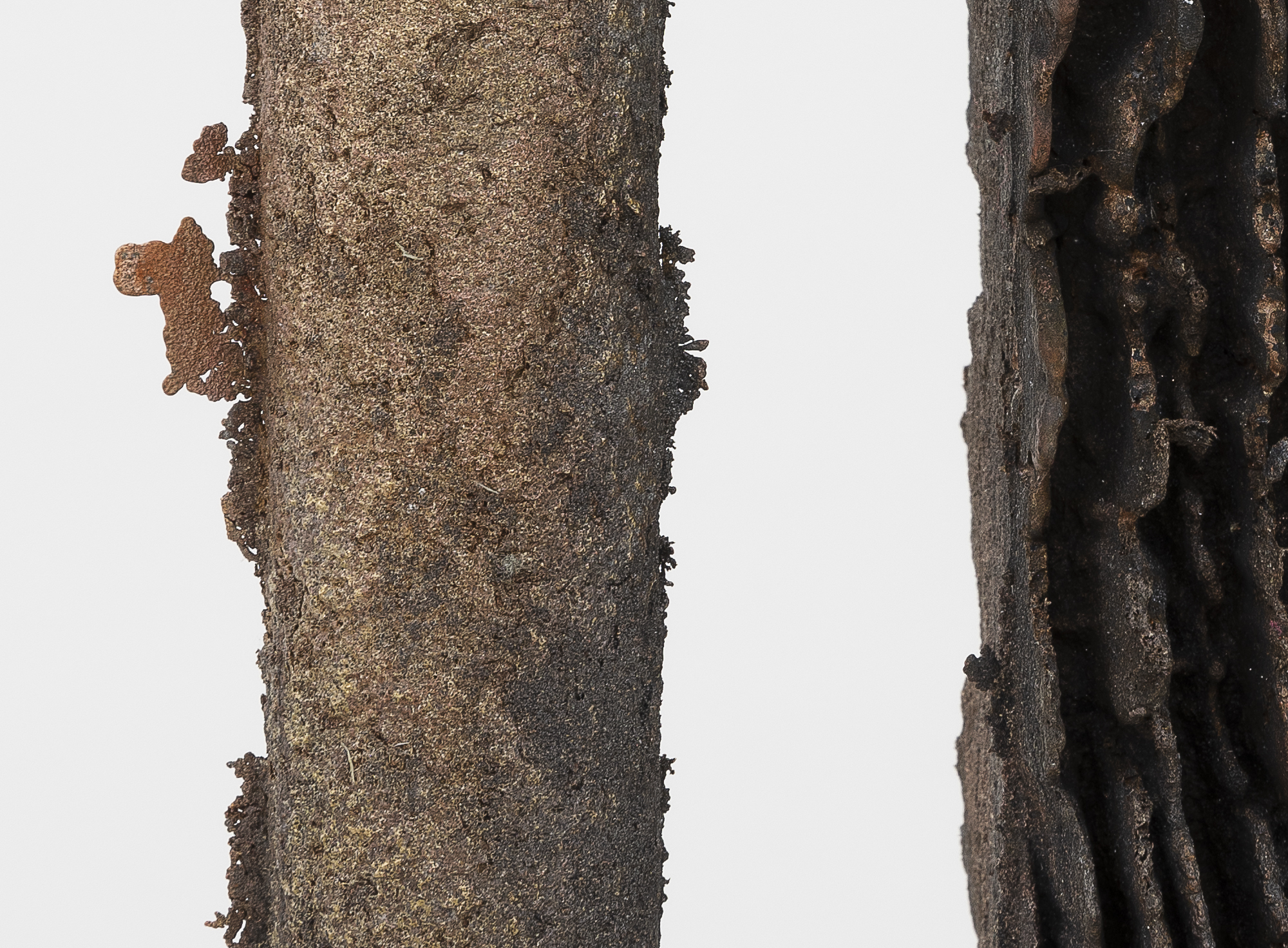
K_enn_ecot_t, Cast Bronze 2021
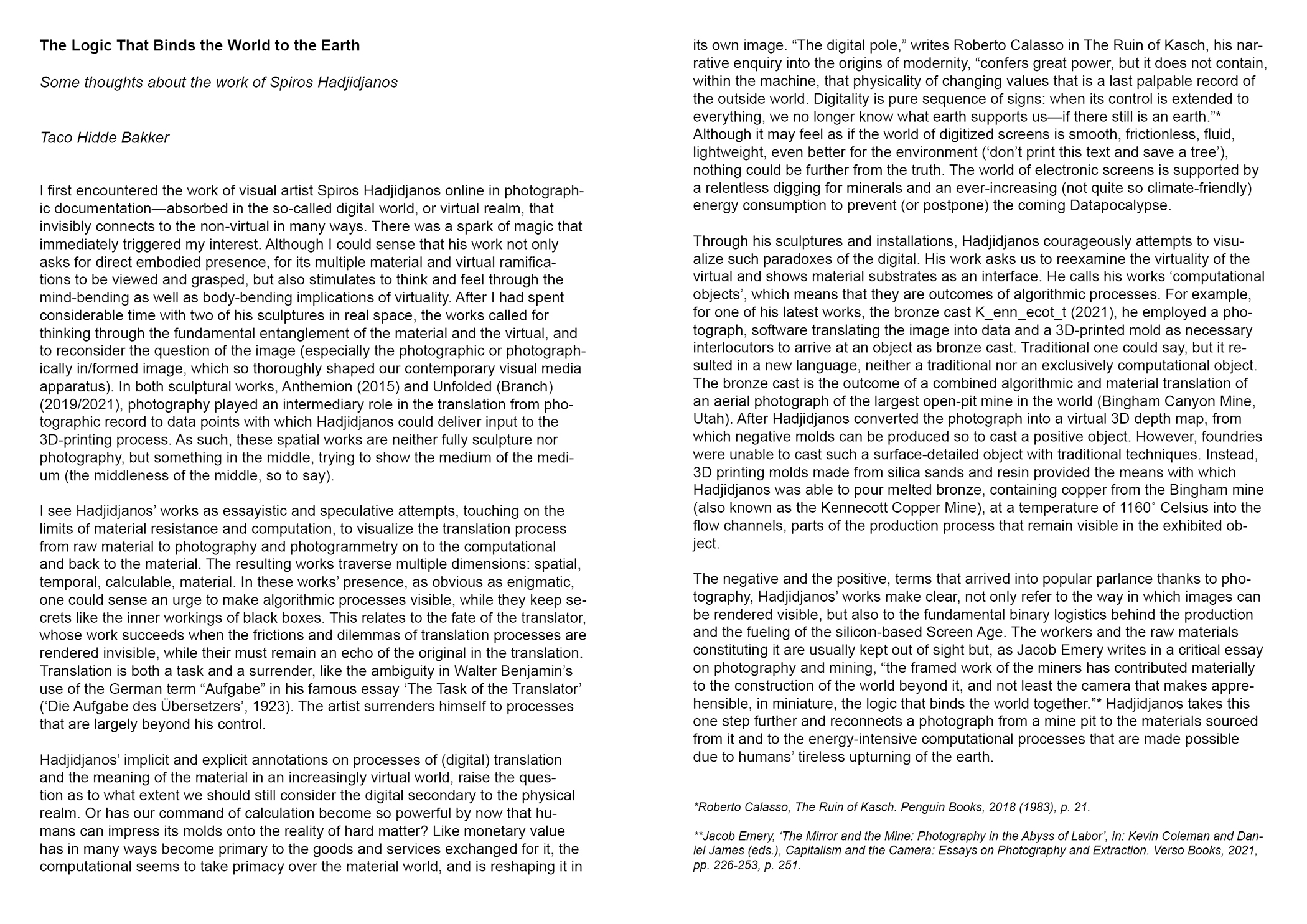
"For one of his latest works, the bronze cast K_enn_ecot_t (2021), Hadjidjanos employed a photograph, software translating the image into data and a 3D-printed mold as necessary interlocutors to arrive at an object as bronze cast. Traditional one could say, but it resulted in a new language, neither a traditional nor an exclusively computational object. The bronze cast is the outcome of a combined algorithmic and material translation of an aerial photograph of the largest open-pit mine in the world (Bingham Canyon Mine). After Hadjidjanos converted the photograph into a virtual 3D depth map, from which negative molds can be produced so to cast a positive object. However, foundries were unable to cast such a surface-detailed object with traditional techniques. Instead, 3D printing molds made from silica sands and resin provided the means with which Hadjidjanos was able to pour melted bronze, containing copper from the Bingham mine (also known as the Kennecott Copper Mine), at a temperature of 1160 ̊ Celsius into the flow channels, parts of the production process that remain visible in the exhibited object." Excerpt from "The Logic That Binds the World to the Earth" - Taco Hidde Bakker
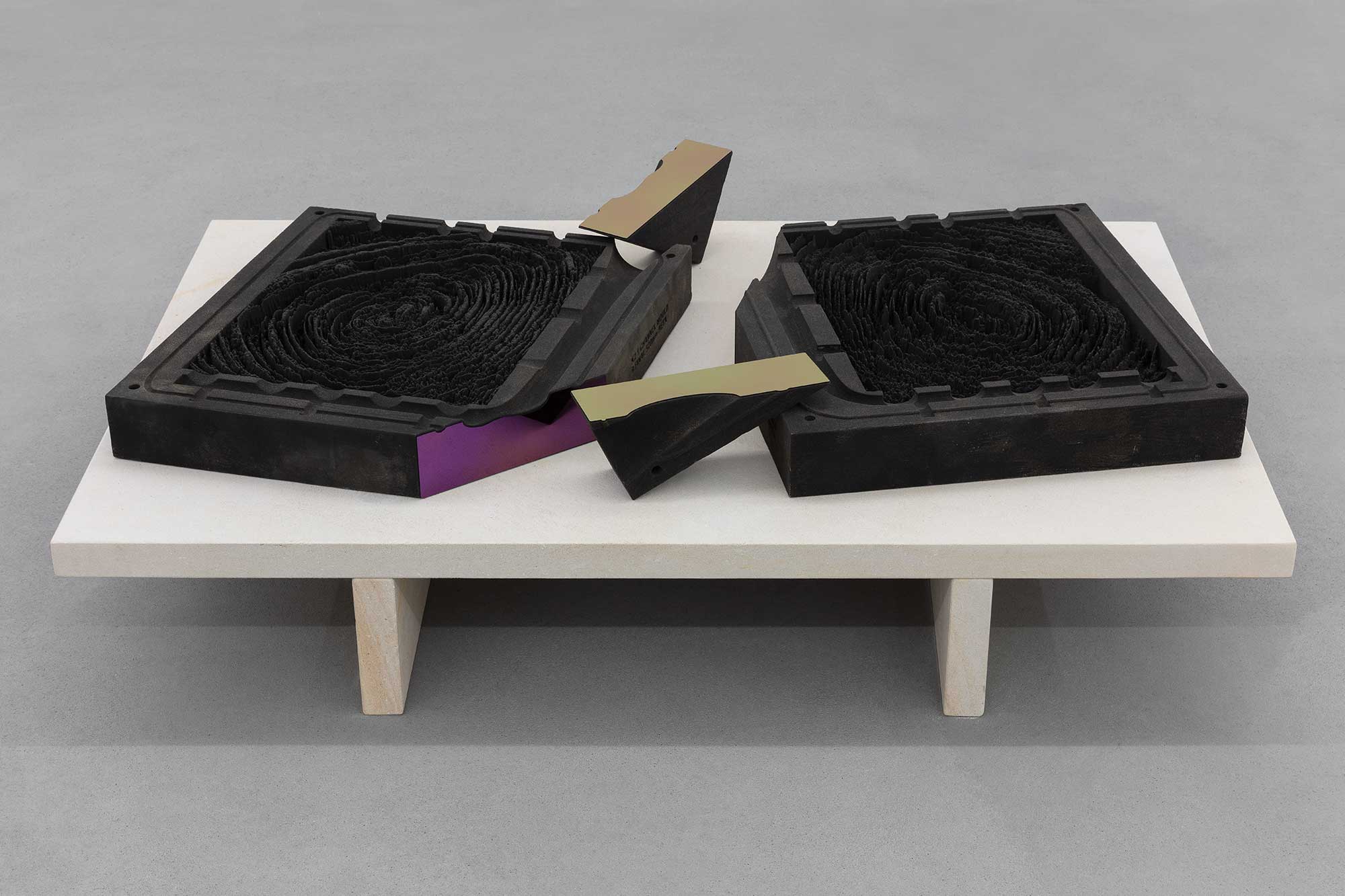
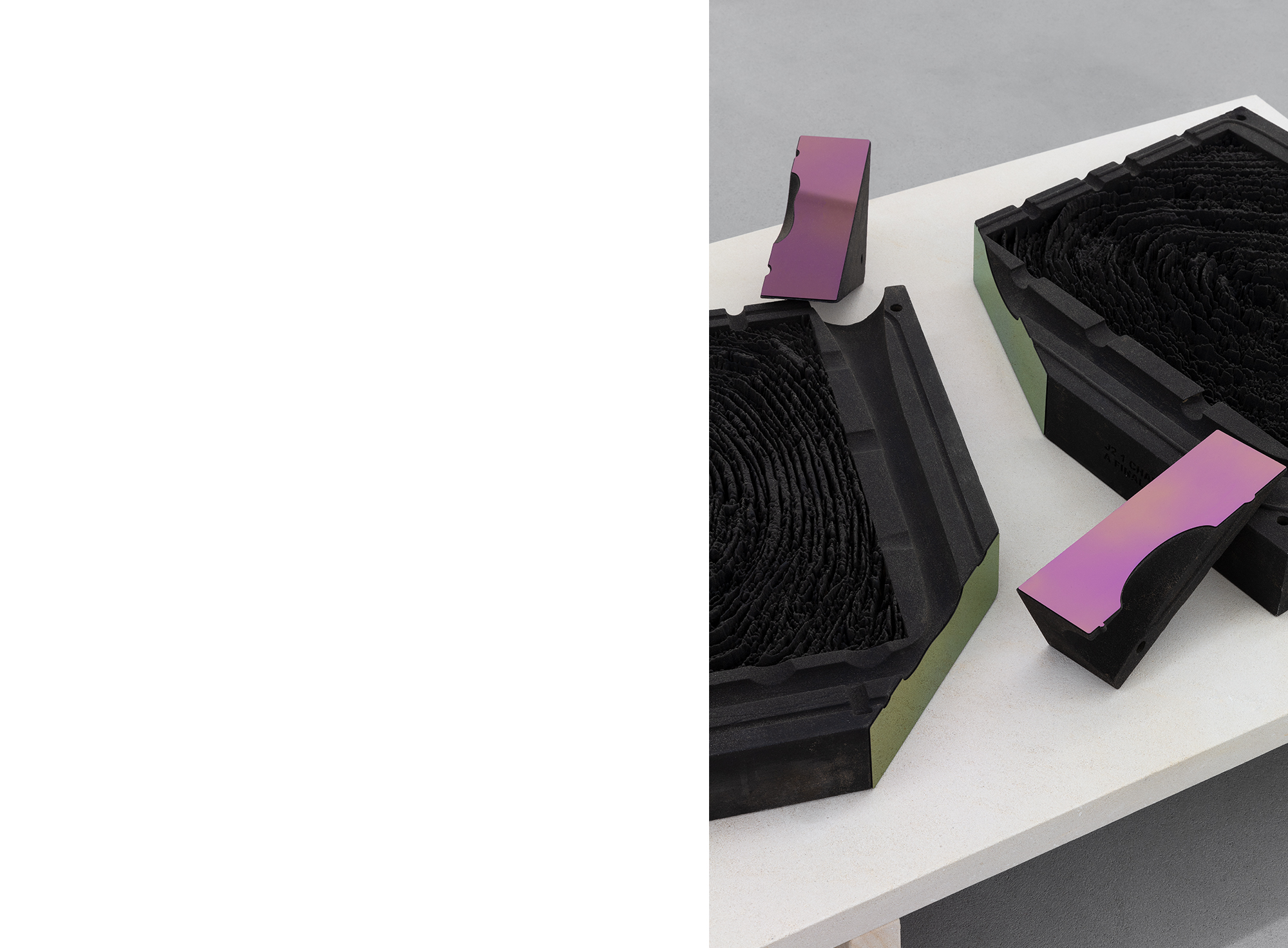
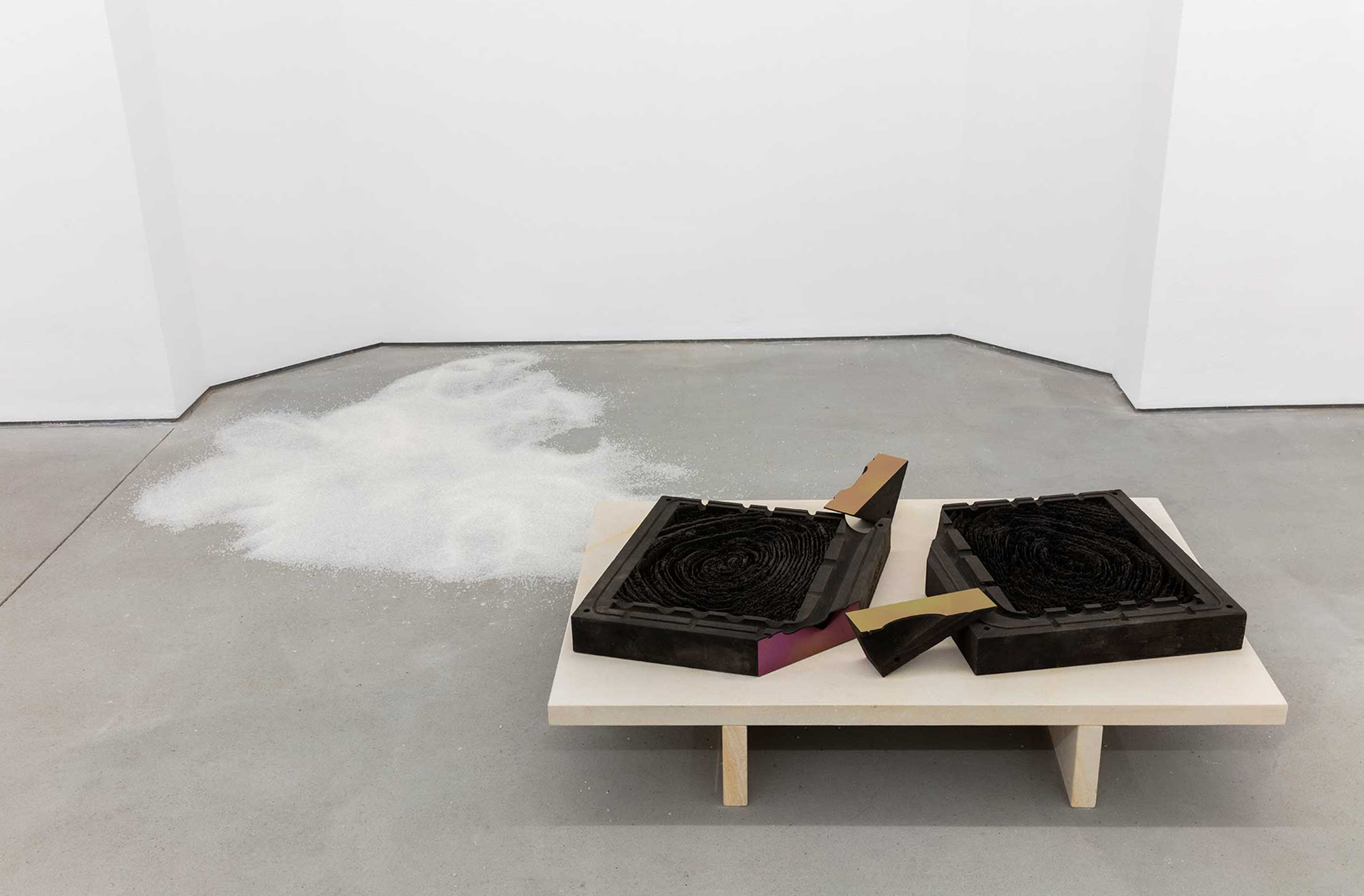
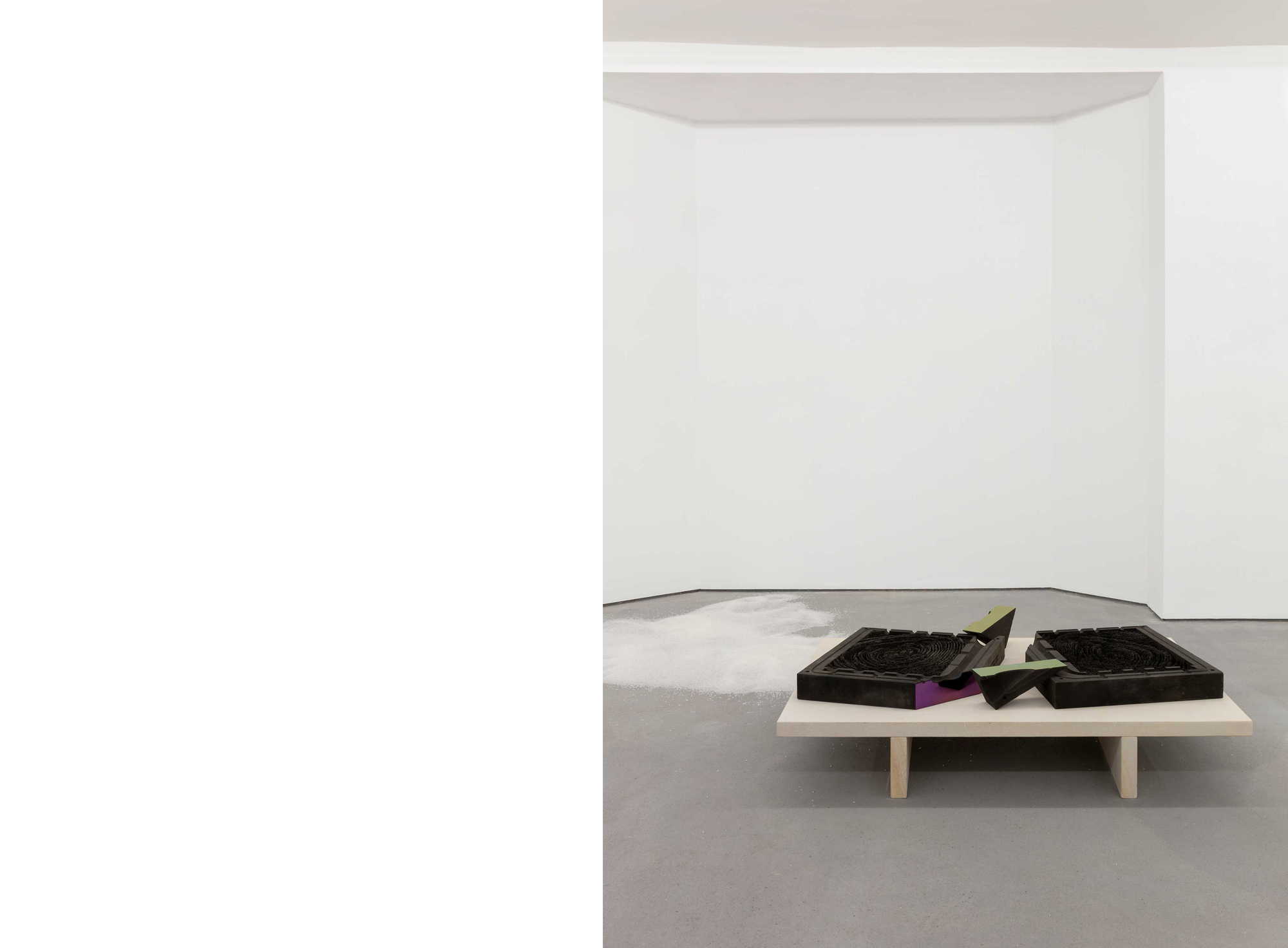
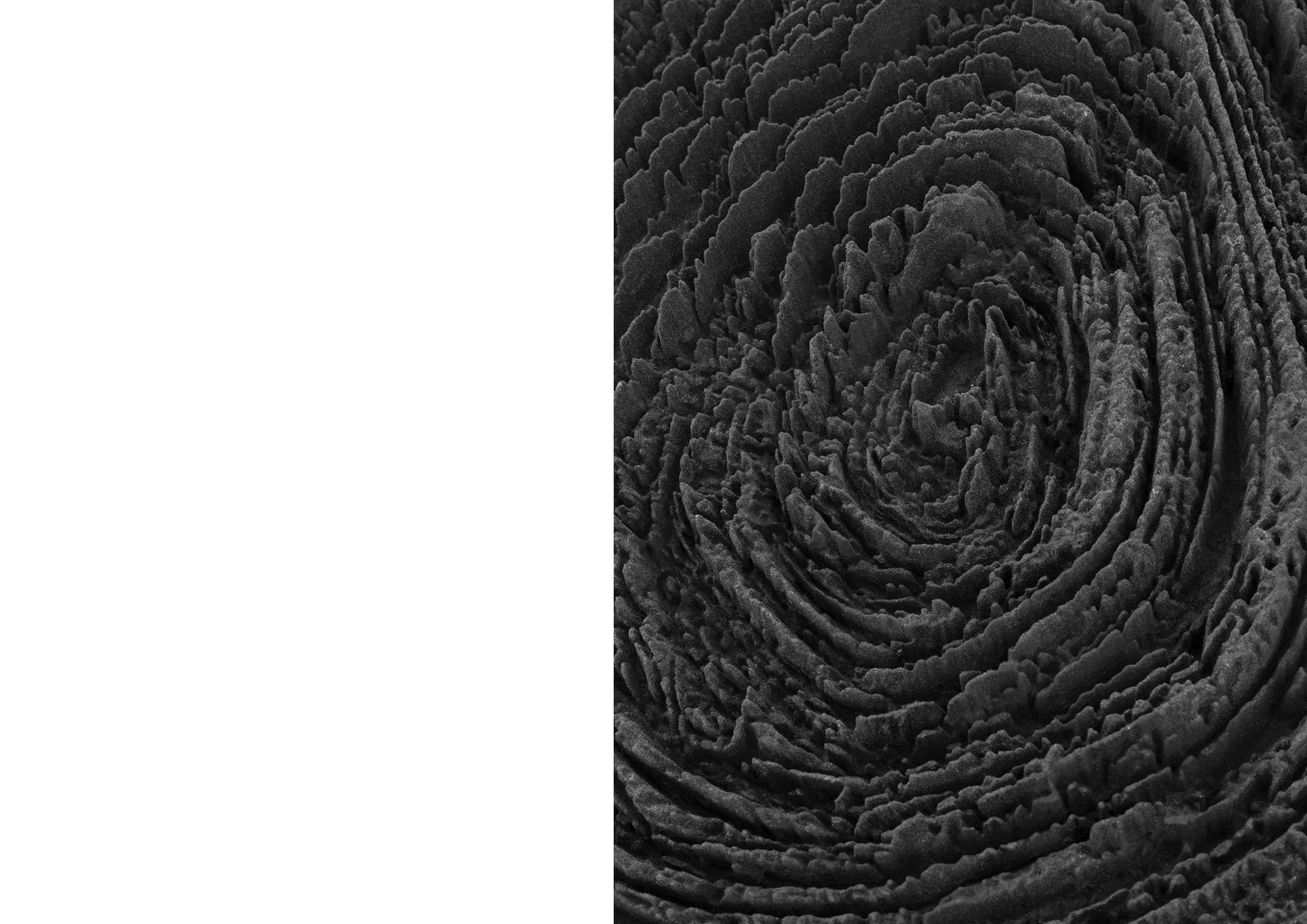
Heigh_t_Ma_ps (Di_gital_Mou_lds) 3D printed Silica Sand, Silicon, Sandstone 2021
An aerial image of the largest artificial excavation in the world (Bingham Canyon Mine) was used to 3D print silica sand moulds, which were then fragmented digitally before fabrication. Their sections have been covered with silicon using data from the 3D models. As an important component in silica sand and rare in nature in its pure state, silicon is the semiconductor that makes the computational substrate in these works possible, indicating its mineral origin. The fragments are placed on top of a silica-rich sandstone slab.
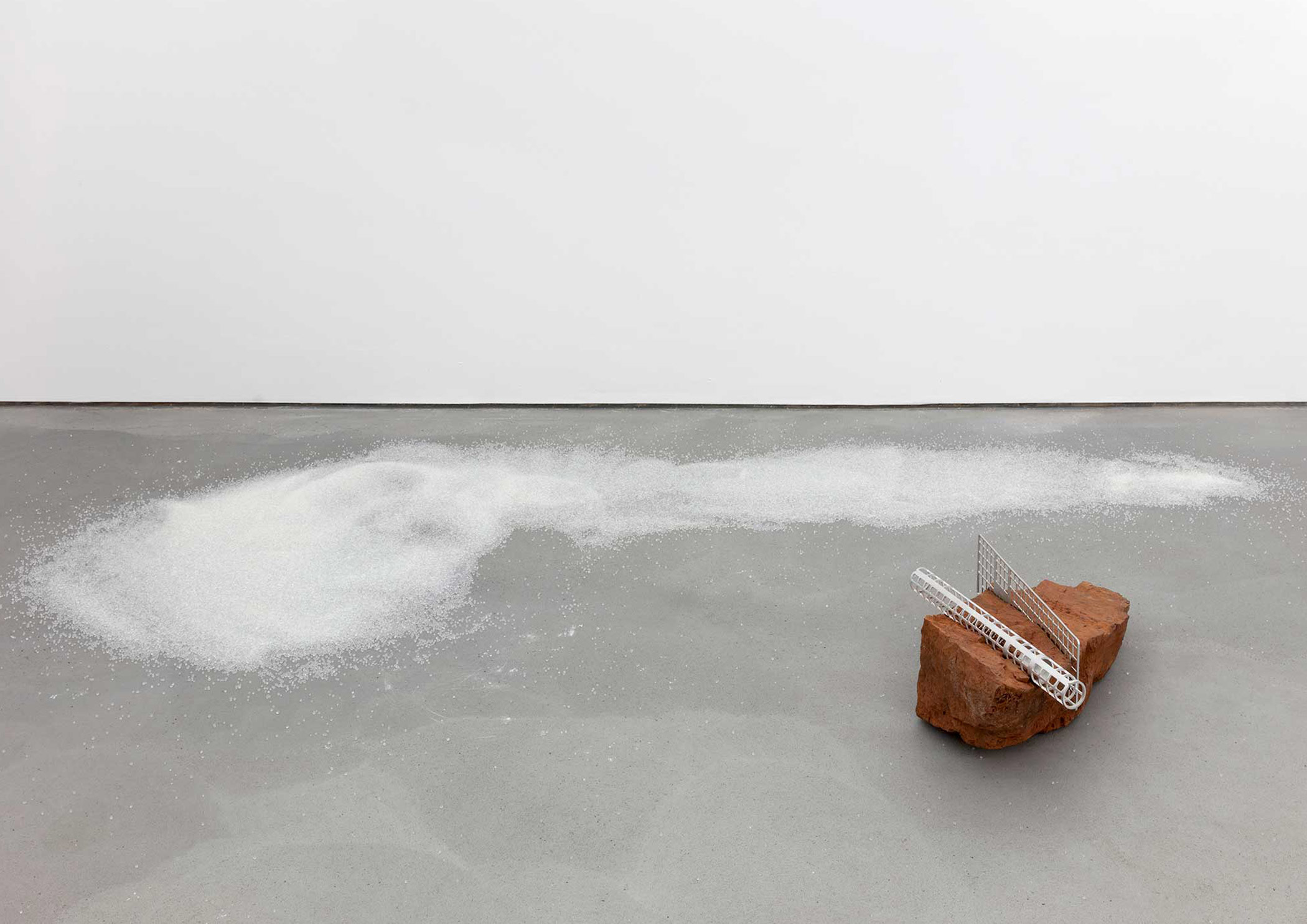

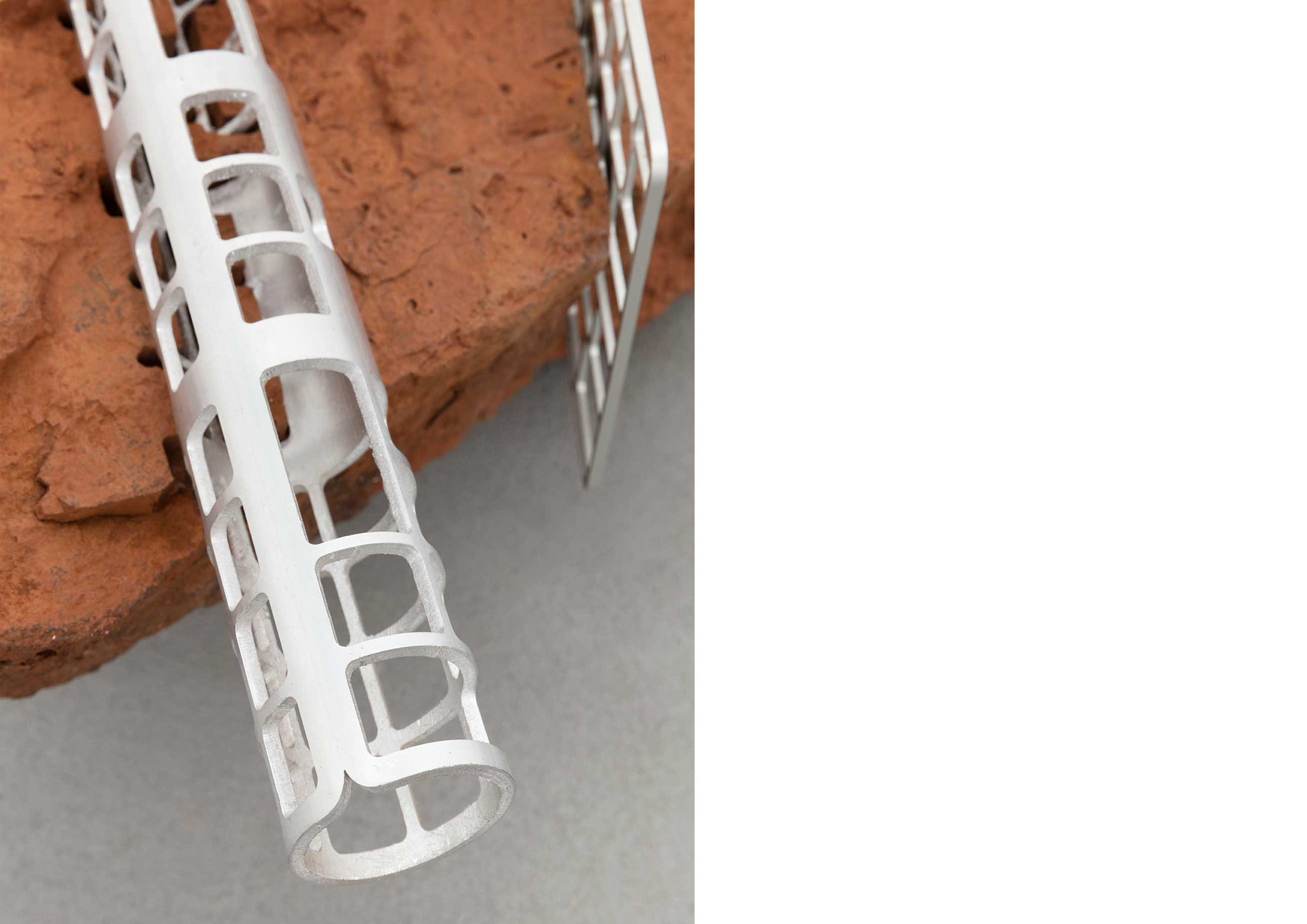
Rol_l_ed_K_eyboar_d Bauxite , Aluminium 2021
Using an Apple aluminium keyboard that has been photographed and converted computationally into an aluminium tube, this work engages with the materiality of information technology, which is geological in nature. The two contrasting materials, a bauxite stone sourced by the artist near Delphi in Greece and the keyboard(s) created from the bauxite's ore, aluminium, fuse simultaneously the two contrasting but usual realities: a product from one of the world's most valuable companies and a mineral from one of the most indebted nations.
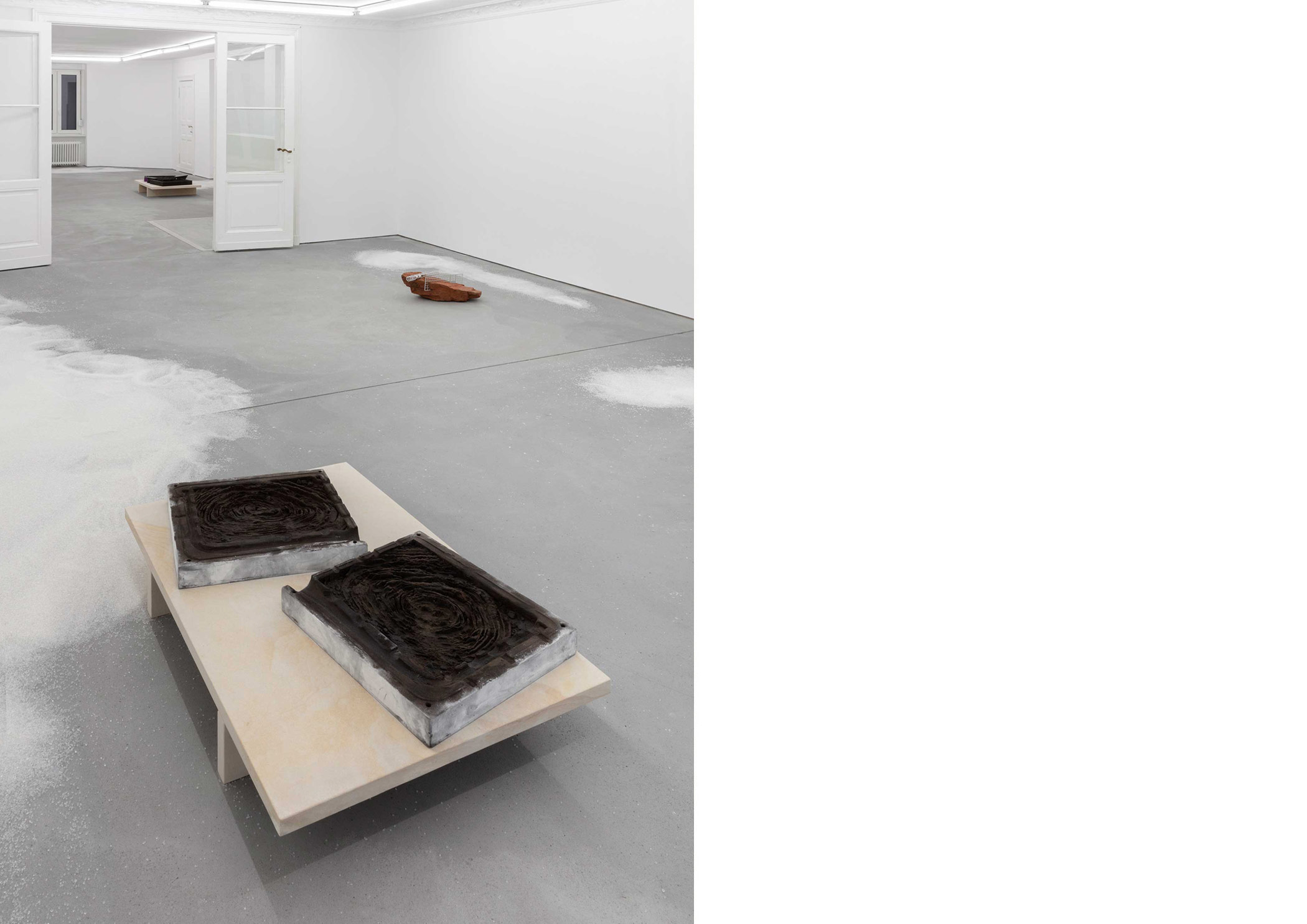
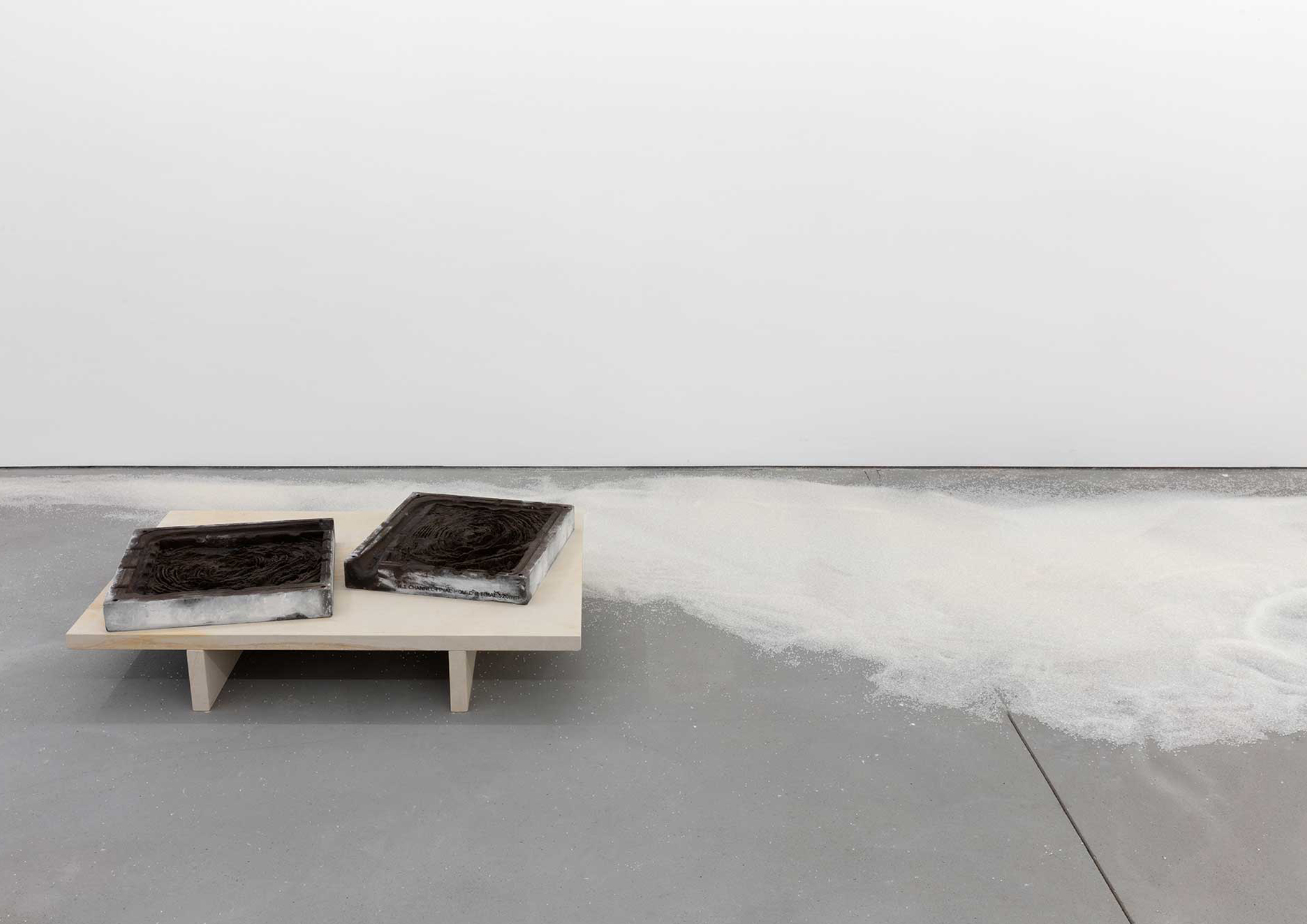
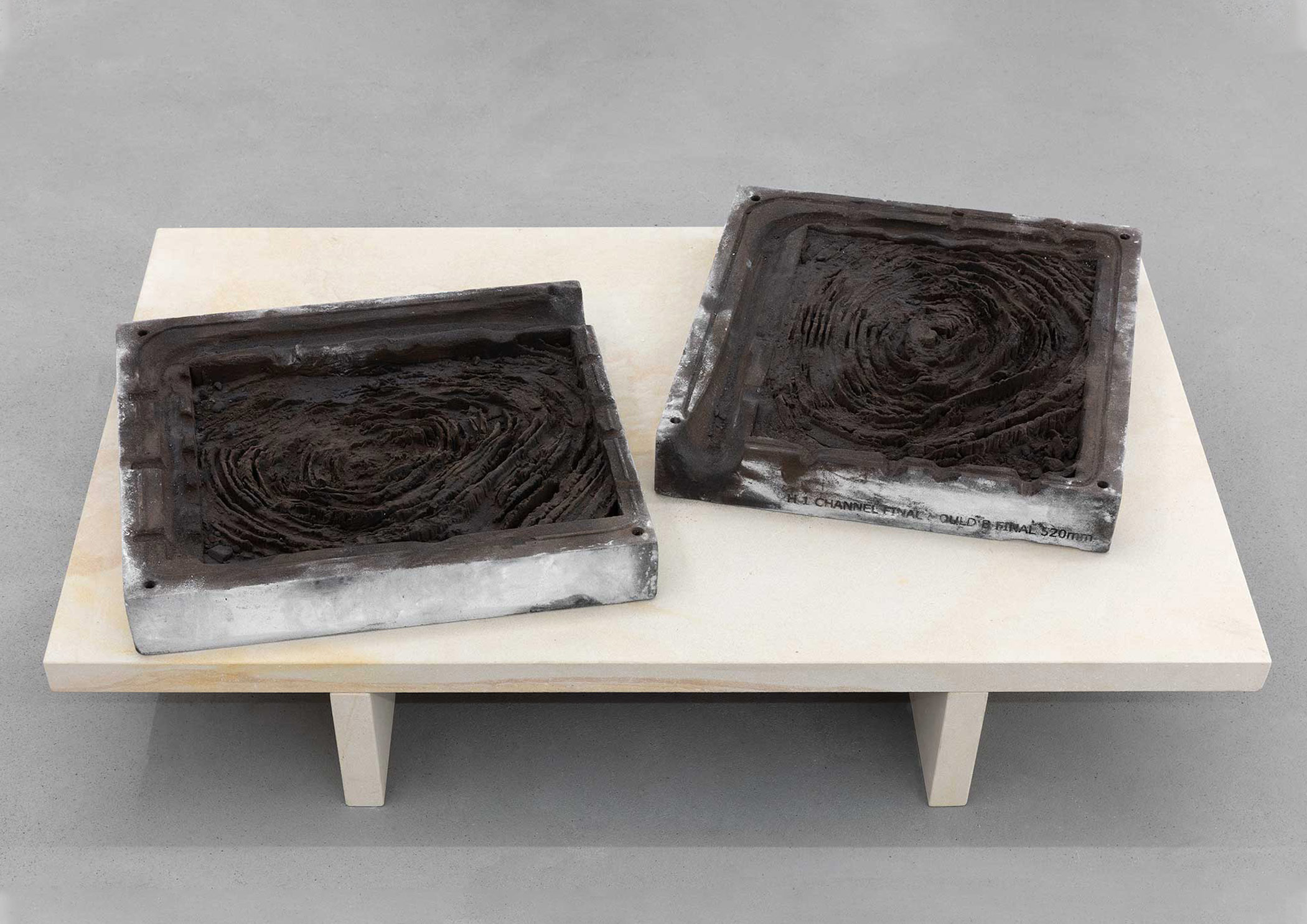

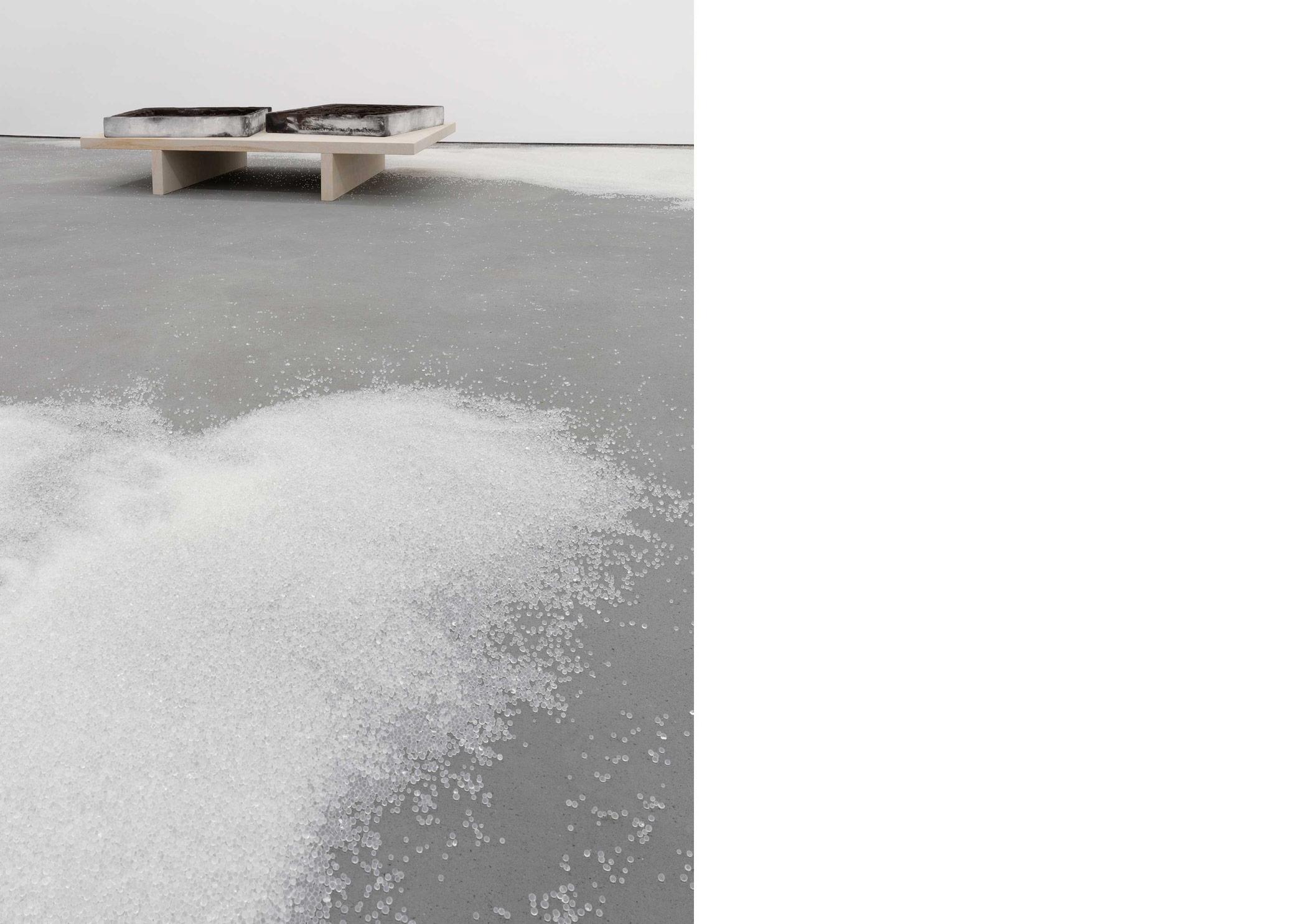
H_e_ight_H_ea_t_Maps 3D printed silica sand, Sandstone 2021
3D printed silica sand moulds that have already been used for bronze casting. Following the extreme temperature and pressure from the molten metal, the moulds have been partially pulverized and suffered physical damage. Their severely altered texture, color and form can only be reproduced by means of a casting process that exposes their surface to the boiling metal. Having been deformed by physical factors without any intervention by the artist, these objects can be described as fossilized imprints of the casting process.

Esc_a_pe_th_e_simu_l_atio_n Silica Gel 2021
A site-specific installation of raw silica gel dispersed on the floor of the gallery. Silica gel is a desiccant that accompanies products as they circulate through continents as part of the global distribution system. In drawing upon museological mechanisms that employ this material for preservation of artifacts for more than half a century, this work inevitably transforms the gallery space into a container for a high-end product whose humidity should be absorbed, its consistency protected, and its integrity preserved. In addition to shifting according to visitors' movement, the fluid form of this work absorbs and releases humidity constantly, which makes it a time-based work.

K20 Kunstsammlung Nordrhein-Westfalen Düsseldorf 2020
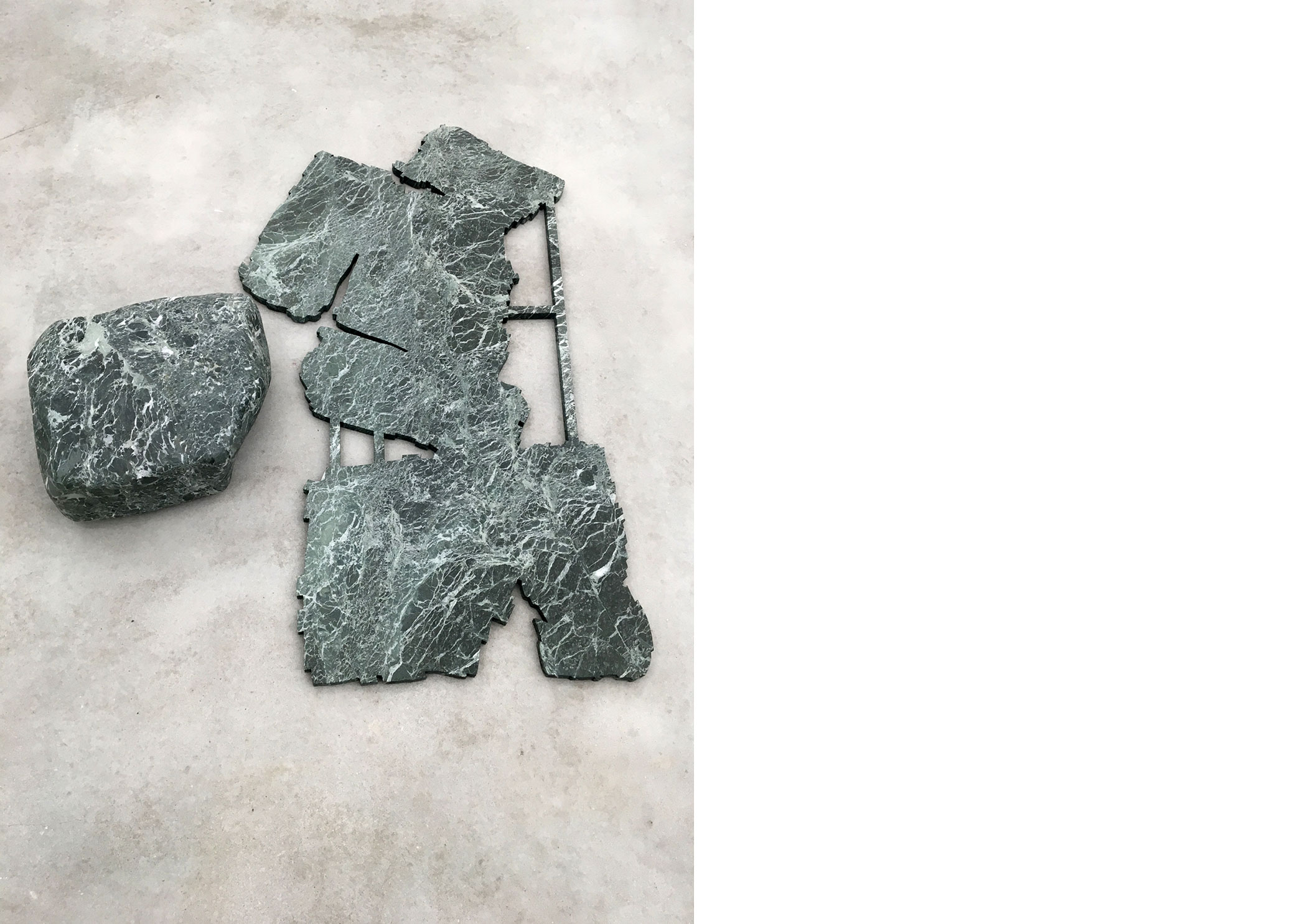
Unfolded Serpentinite 2019
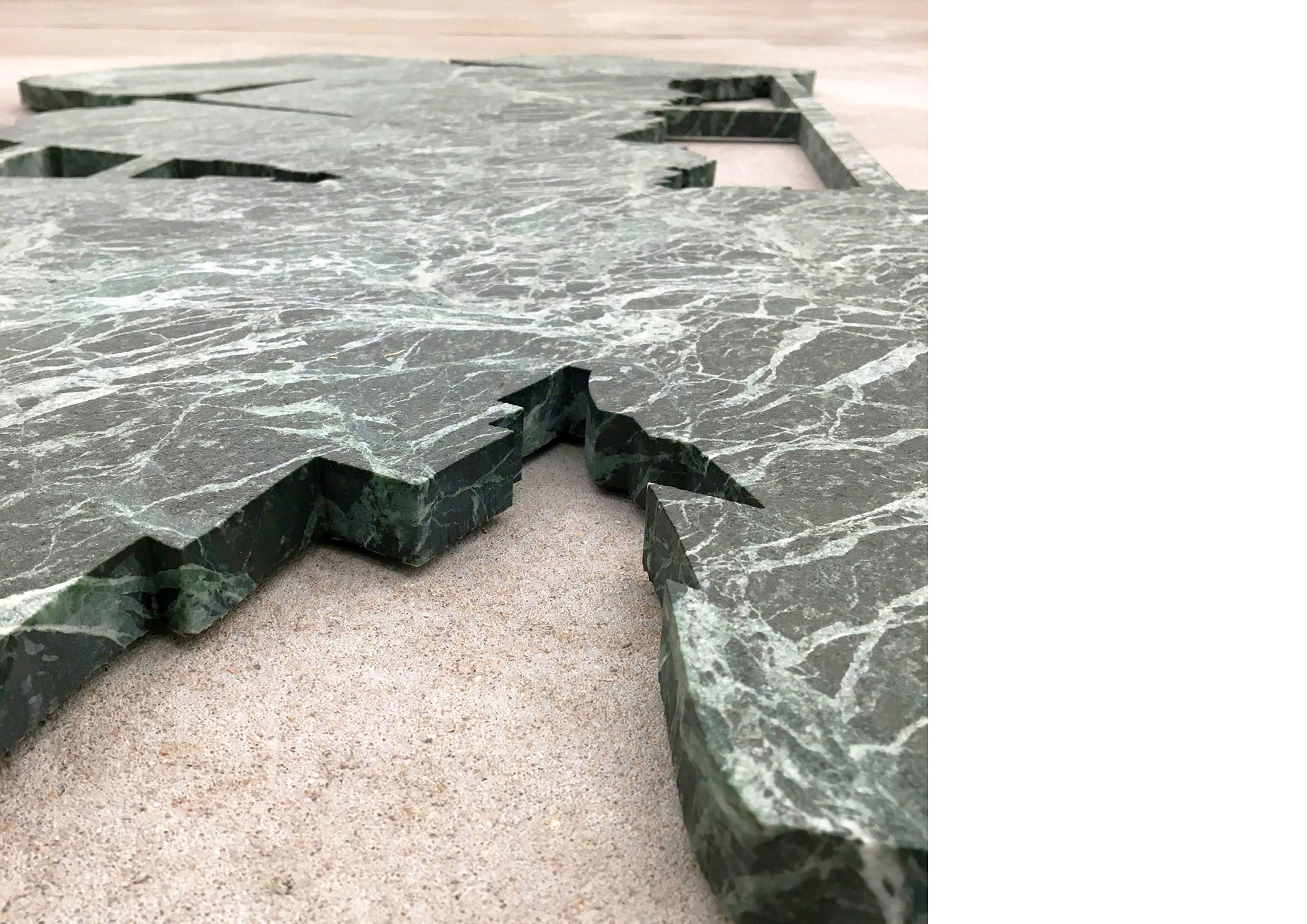
Unfolded Serpentinite 2019
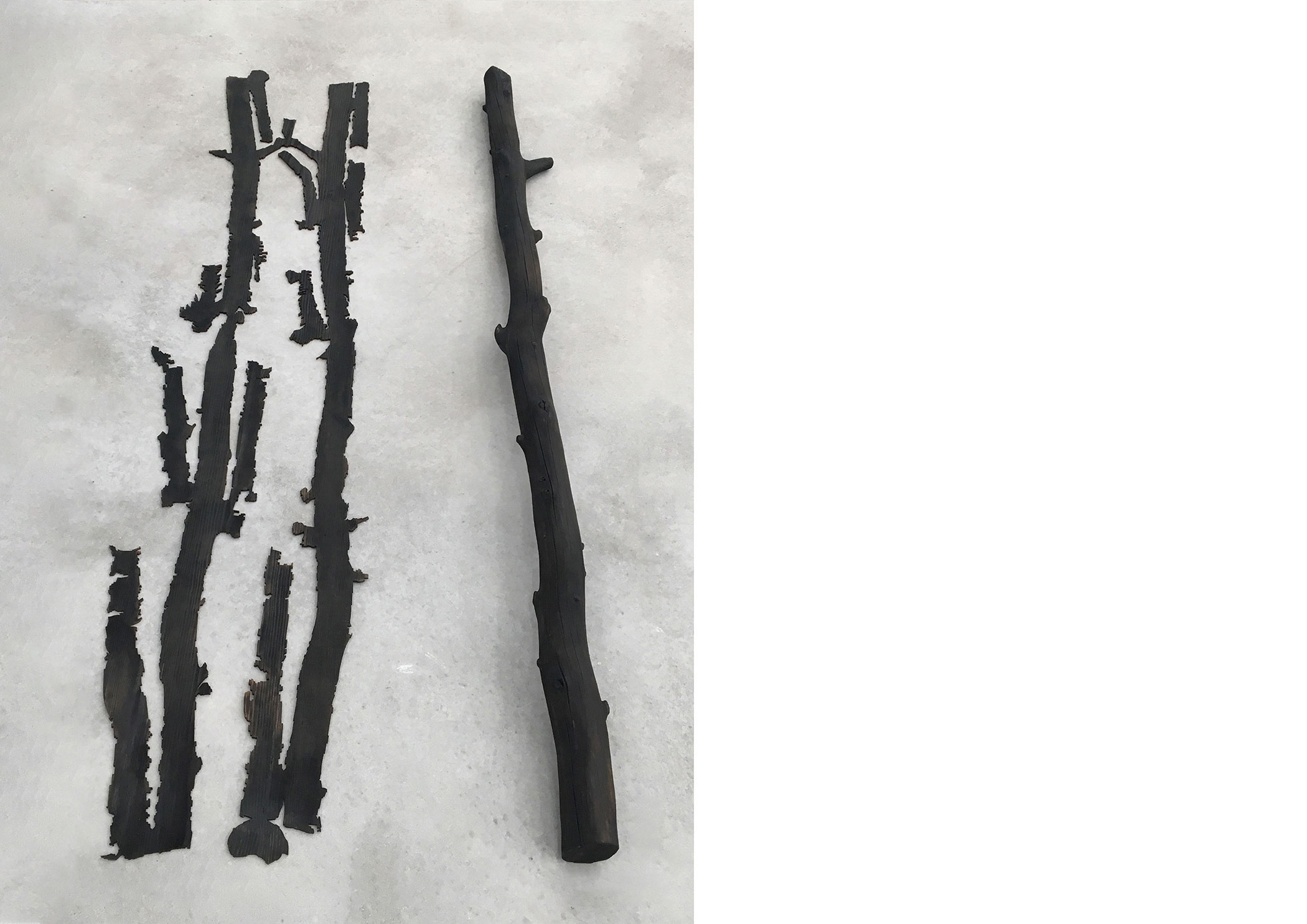
Unfolded Pine (Charred) 2019

Unfolded (Branch) 2019
The work Unfolded (Branch) (2019) starts from a 3D-scan of a sculptural object - in this case a tree branch - which is then 'unfolded' digitally. This method leads to a new series of digital images which are sent to a laser cutter, which in turn creates a new 'unfolded' version of the original sculptural object. What interests Hadjidjanos in this interplay with material objects and dematerialized images, is that this process includes himself as a decision maker but not as a producer of the physical object. - Steven Humblet
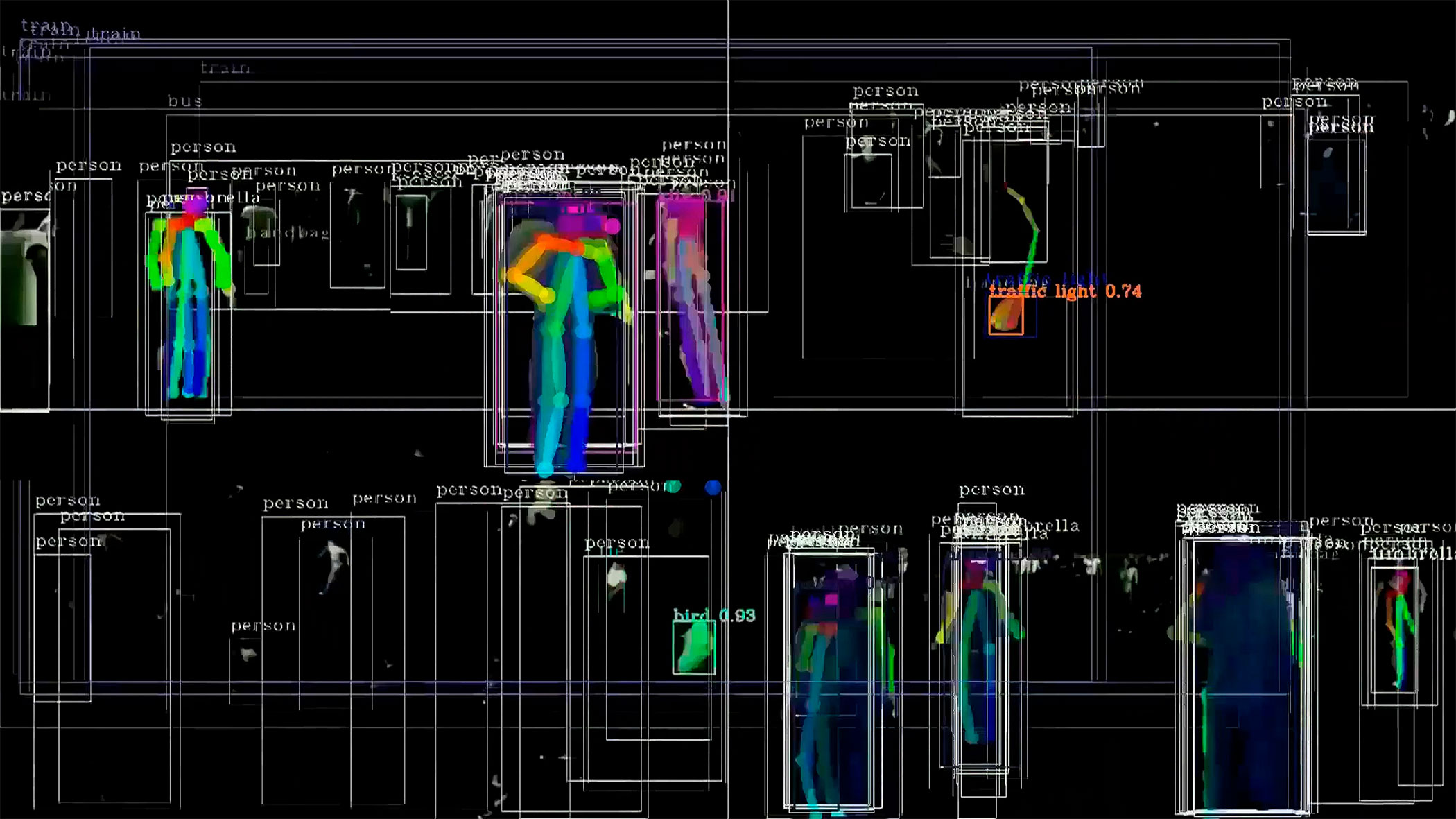
Deep Crowd Simulation Breakdown 3D Animation, Neural Networks 2019
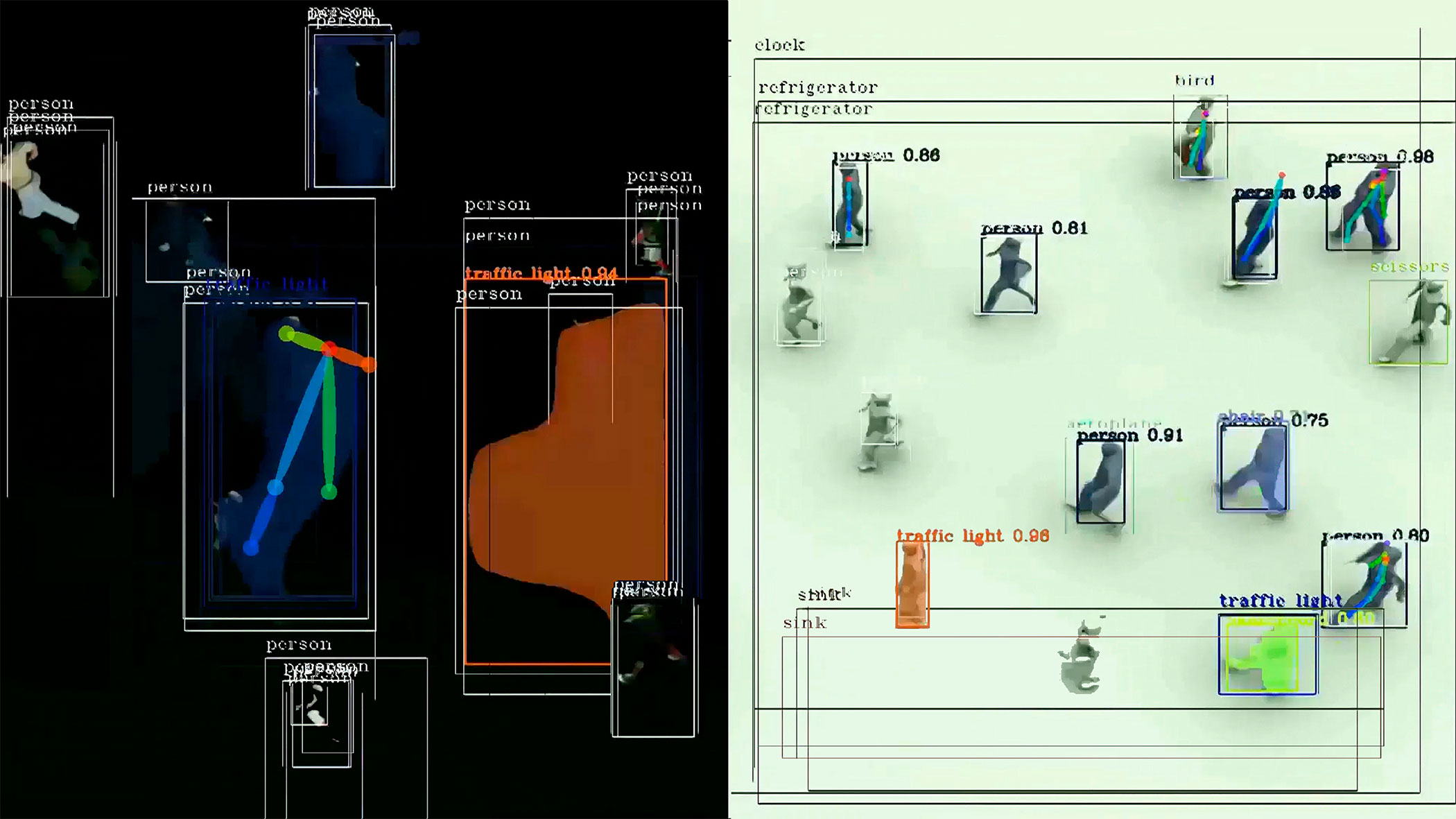
Deep Crowd Simulation Breakdown 3D Animation, Neural Networks 2019
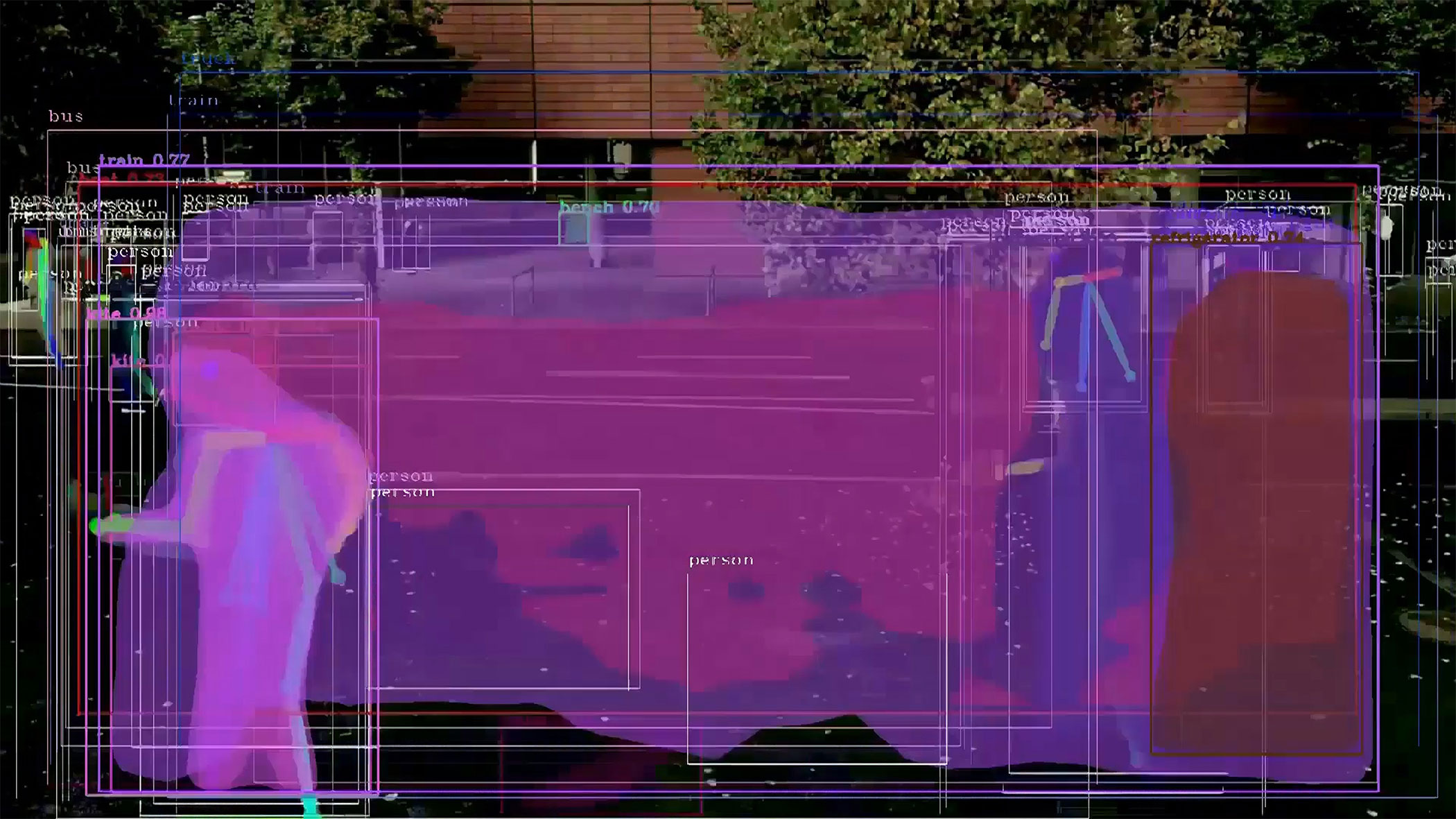
Deep Crowd Simulation Breakdown 3D Animation, Neural Networks 2019
Deep Crowd Simulation Breakdown 2019
The video work Deep Crowd Simulation Breakdown (2019) , transfers authorship onto artificial intelligence agents, in a process that turns against itself. Pre-existing video footage of a virtual crowd is repeatedly processed and reinterpreted by multiple neural networks, exposing not only the biases and weaknesses of machinic vision but also of its own functionality.This automated generative process blurs the boundaries between text and image, rendering text into image of text.
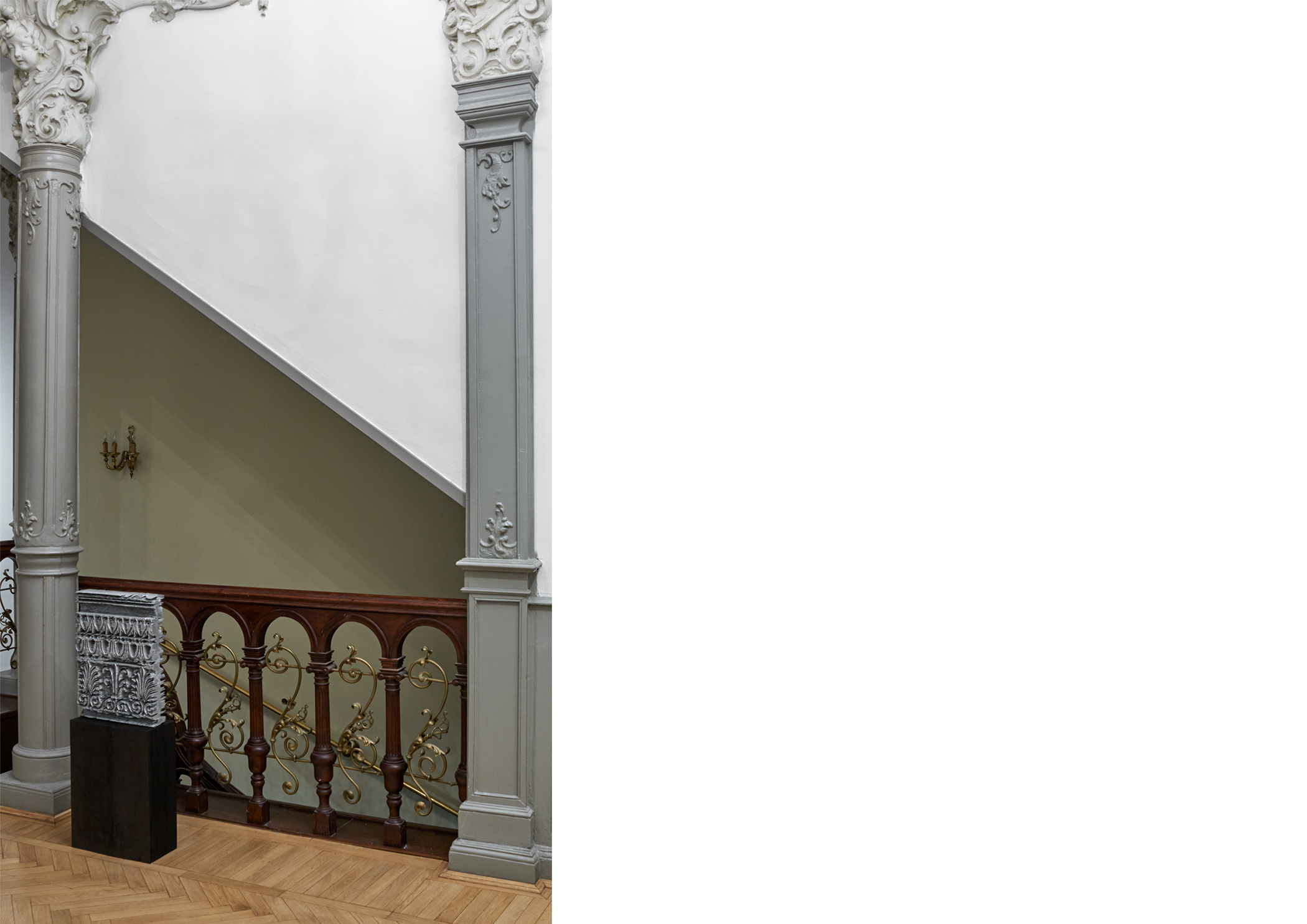
Hungarian House of Photography Budapest 2019
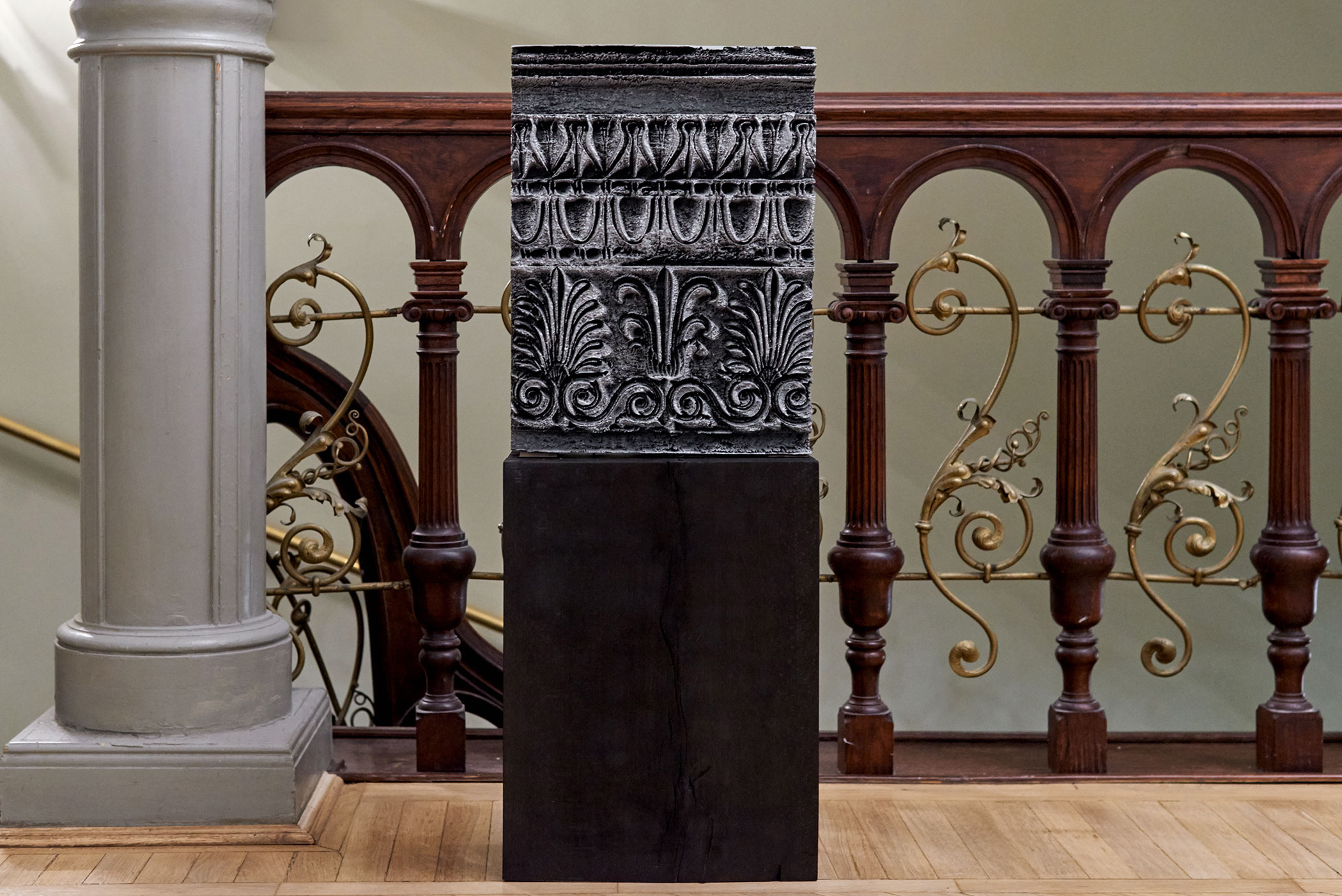
Hungarian House of Photography Budapest 2019

Anthemion, Alumide 3D Print 2015
For Anthemion (2015) Spiros Hadjidjanos traveled to his hometown Athens to research the archive of the German Archeological Institute and to document an anonymous archival image from 1929 depicting the anthemion, an ornament frieze, of the Erechtheum. Hadjidjanos photographic-sculptural interpretation is a depth map of the original photograph: a sculpture of a photograph of a sculpture, using the proportions of the original image, but adding depth as a new dimension. The mutation of both the anthemion as actual ornament, and its representation as image through different spatial and temporal contexts has been dramatic. For example, the image has been employed for embellishment, avant-garde photography, photobooks about the new objectivity movement, but also as material for historical studies, database records and political propaganda. Hadjidjanos' Anthemion follows the true size of the original ornament of the Erechtheum. Like a photographic negative the sculpture has a positive and a negative side where the light and shadows are respectively extruded. This work is not merely a representation but draws on the formal relationship of the photographic negative and positive as well as on the binary relationship between cast and mold.

HD/VR Sculpture Kunstmuseum Stuttgart 2018 & ZKM Karlsruhe 2019
The works of the Greek artist Spiros Hadjidjanos revolve around the demonstrations of the physical foundations of digital information. The Network Sculptures, which have been created since 2009, are linked in their form. Each constists of eight aluminium or copper wires, curved in the shape of a sine wave. The uniform curves refer to the conventional representation of electromagnetic waves. Both the physical and the spatial expansion of the information flows are addressed here. A network sculpture made of copper is also the focus of the HD/VR Sculpture (2016). In this installation, the artwork is situated between a computer and a VR headset. Copper has a high electrical conductivity. As soon as the sculpture is connected to the wires of the other two devices, it becomes transformed from a passive object into an active conductor. The works of the Greek artist Spiros Hadjidjanos revolve around the demonstrations of the physical foundations of digital information. The Network Sculptures, which have been created since 2009, are linked in their form. Each constists of eight aluminium or copper wires, curved in the shape of a sine wave. The uniform curves refer to the conventional representation of electromagnetic waves. Both the physical and the spatial expansion of the information flows are addressed here. Hadjidjanos allows the copper sculpture to transgress from the real world to the digital world. In the VR work, at the end of a gloomy corridor, users have the choice of turning left or right. With the help of controllers, one can teleport to one of the two sites, a diffuse, green room or a platform in outer space. In the former case, users are completely surrounded by the vibrating body; and in the latter case it floats multiplied, in the midst of rocks above them. The installation underlines the fact that all digital data has amaterial origin in the analogue world. The sculpture becomes a medium and a metaphor. The electrical energy is not visible in the object lying on the floor but is nevertheless physically present. Conversely, the artist counteracts its physical properties, its dimensions, and conditions of gravity in the virtual world. There, the visualised, vibrating tension triggers a physical reaction among the viewers. By inference, the perception of the sculpture within the exhibition space becomes altered. - Anne-Kathrin Segler, Kunstmuseum Stuttgart, 2018
HD/VR Sculpture (2016) forms a new iteration of a long-running series of sculptures in which thick copper wires twisted into the approximation of a 3D sine wave are used to transmit data. Each passive-looking copper object becomes an active conductor as soon as wires are hooked up to both of its ends. In this case, data is sent via the sculpture from a computer to a VR headset. Putting on the headset, one’s perspective is suddenly swung off-kilter: one finds oneself looking up at a giant simulation of the copper sculpture itself. By pressing a button on a hand-held controller, the user can teleport between two scenes (one abstract, the other a kind of lunar landing pad in the midst of a solar system) to view the giant version of the sculpture in different settings. - Elvia Wilk, Art Agenda, 2016
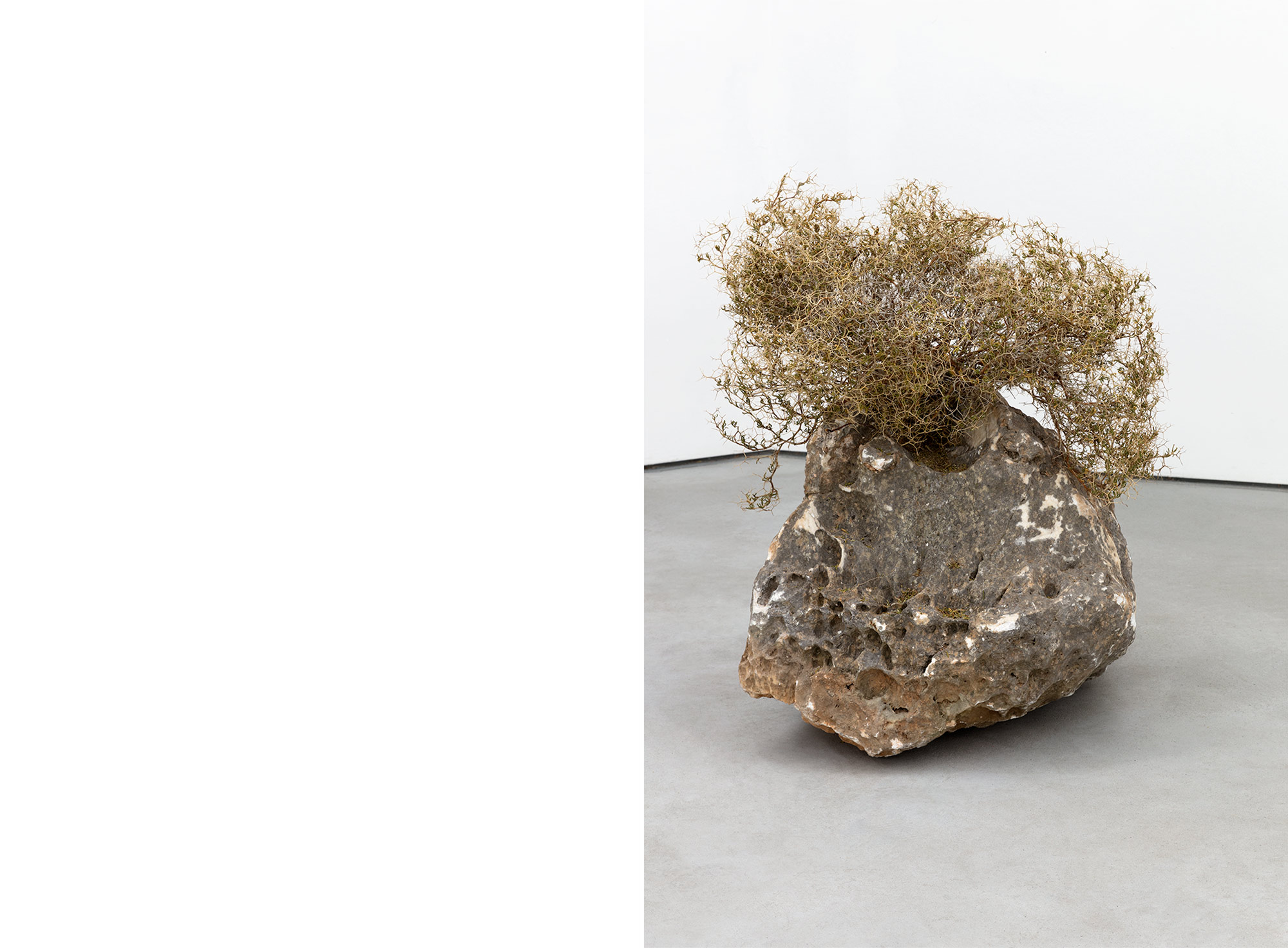
Life/Nonlife (Euphorbia Acanthothamnos) (Detail) 2018 Pentelic Marble, Euphorbia Acanthothamnos

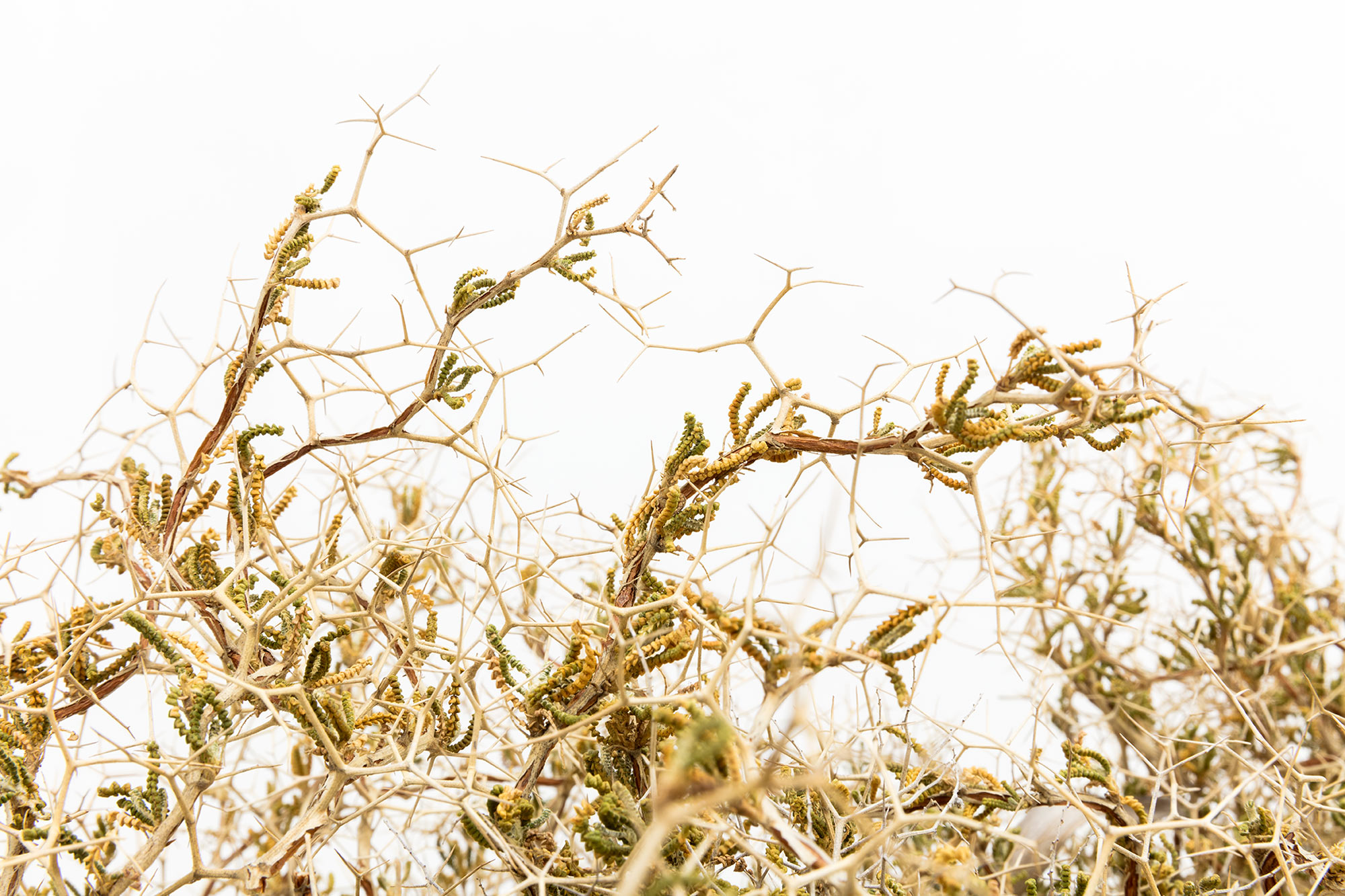
Life/Nonlife (Euphorbia Acanthothamnos) (Detail) 2018 Pentelic Marble, Euphorbia Acanthothamnos
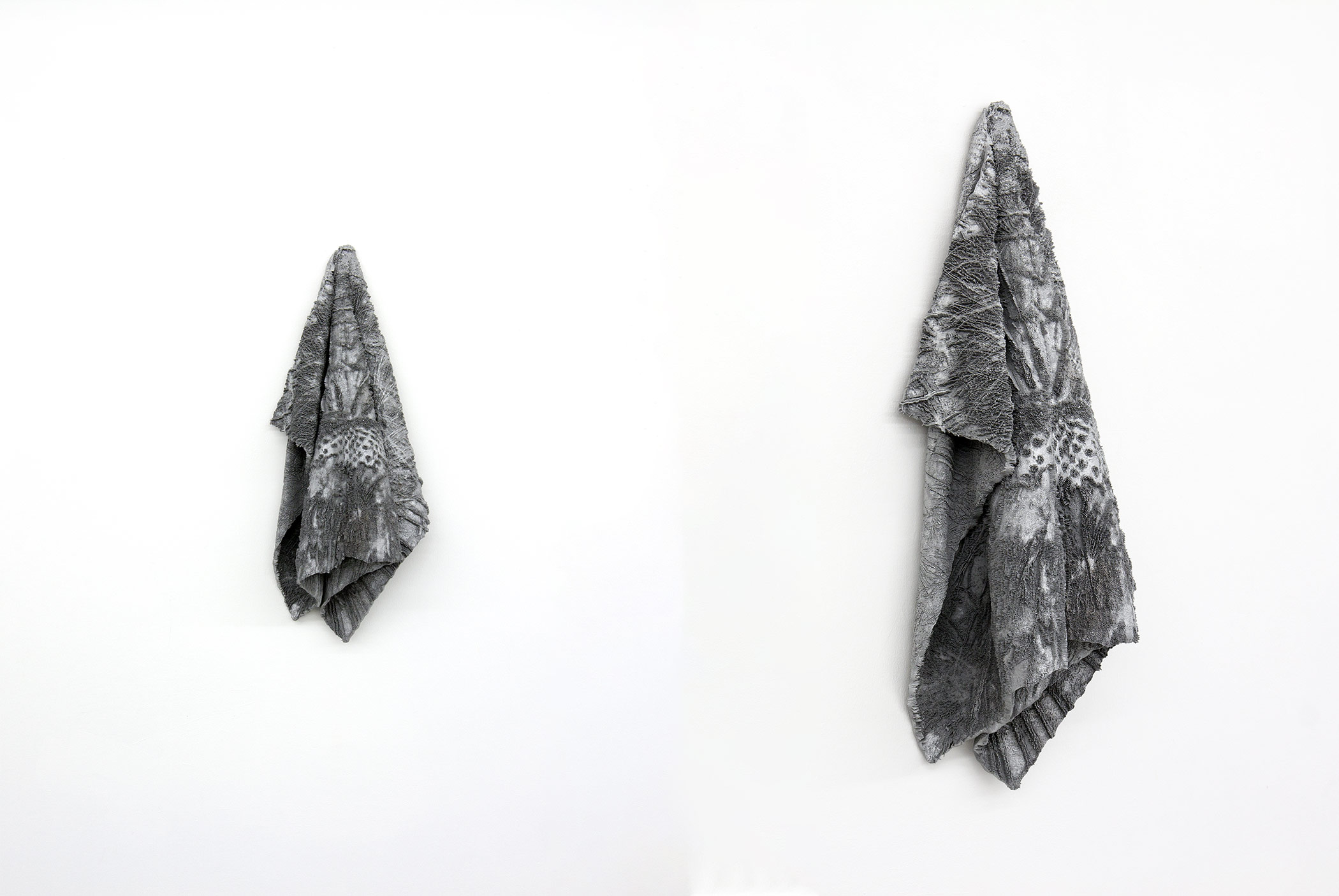

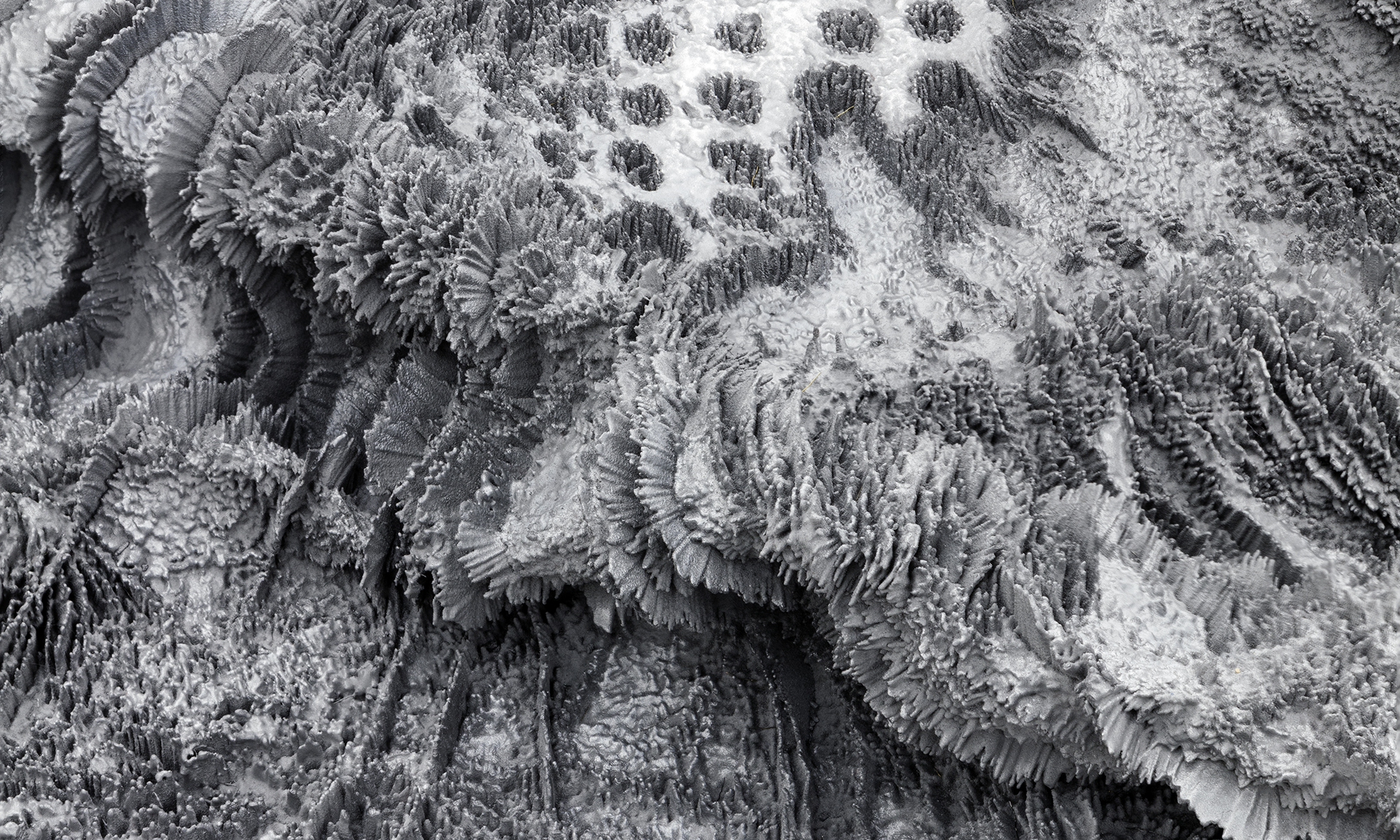
Taraxacum Officinale (xy) 2016, Alumide 3D Print, Aluminium Coating, Taraxacum Officinale Seeds
The series united under the name of “Taraxacum Officinale” (2016) refers explicitly to the historical lineage of mechanical image reproduction. In 1930 the German photographer Albert Renger-Patzsch, a prominent proponent of the New Objectivity school, published a book of flower photographs, including one of a dandelion seed head. The dandelion image is reiterated in each work of the series; for Taraxacum Officinale (zx), (xy), and (xyz), the flat image has been extruded with software into three dimensions, and then 3D-printed in aluminum. - Elvia Wilk, Art Agenda, 2016
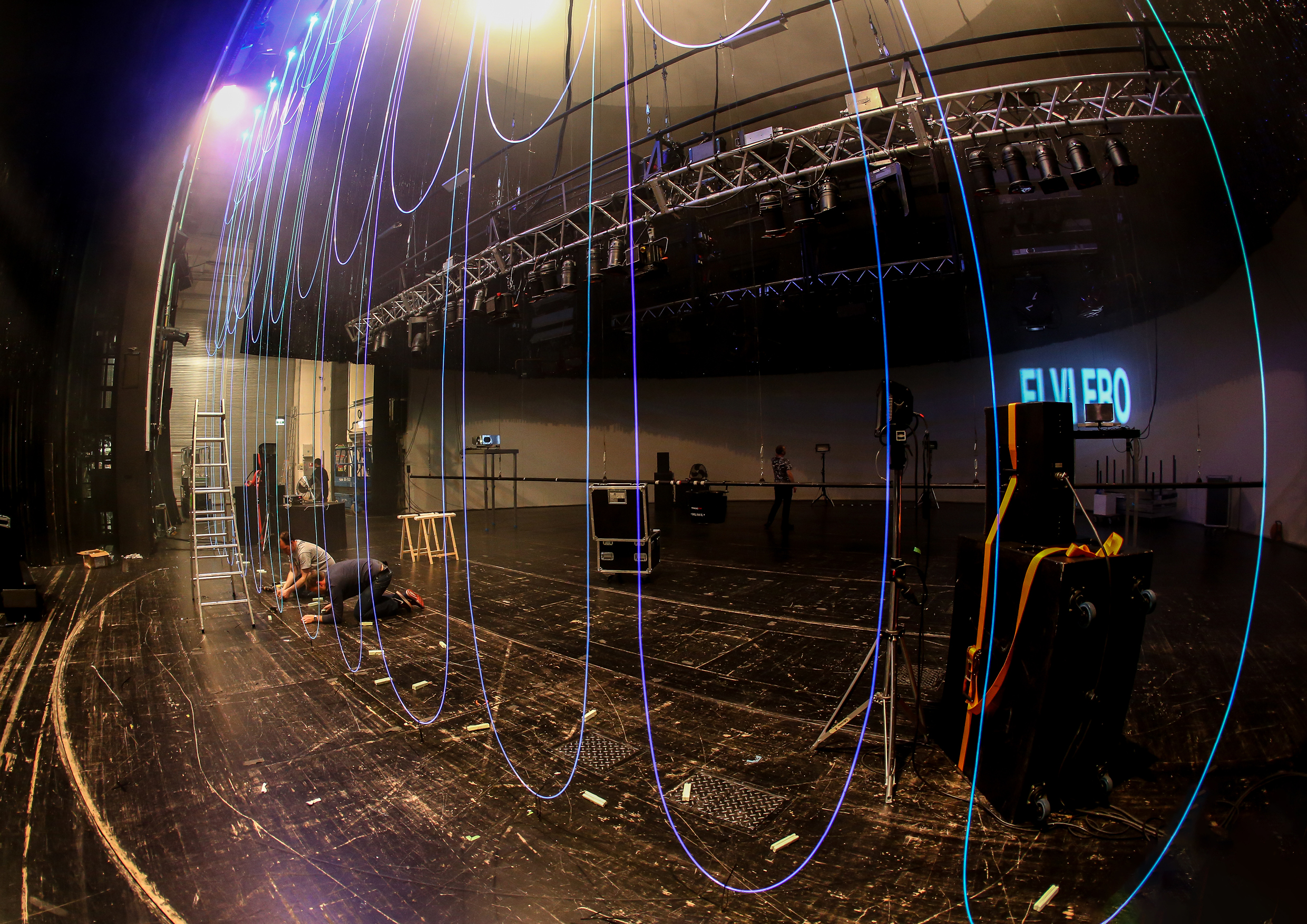
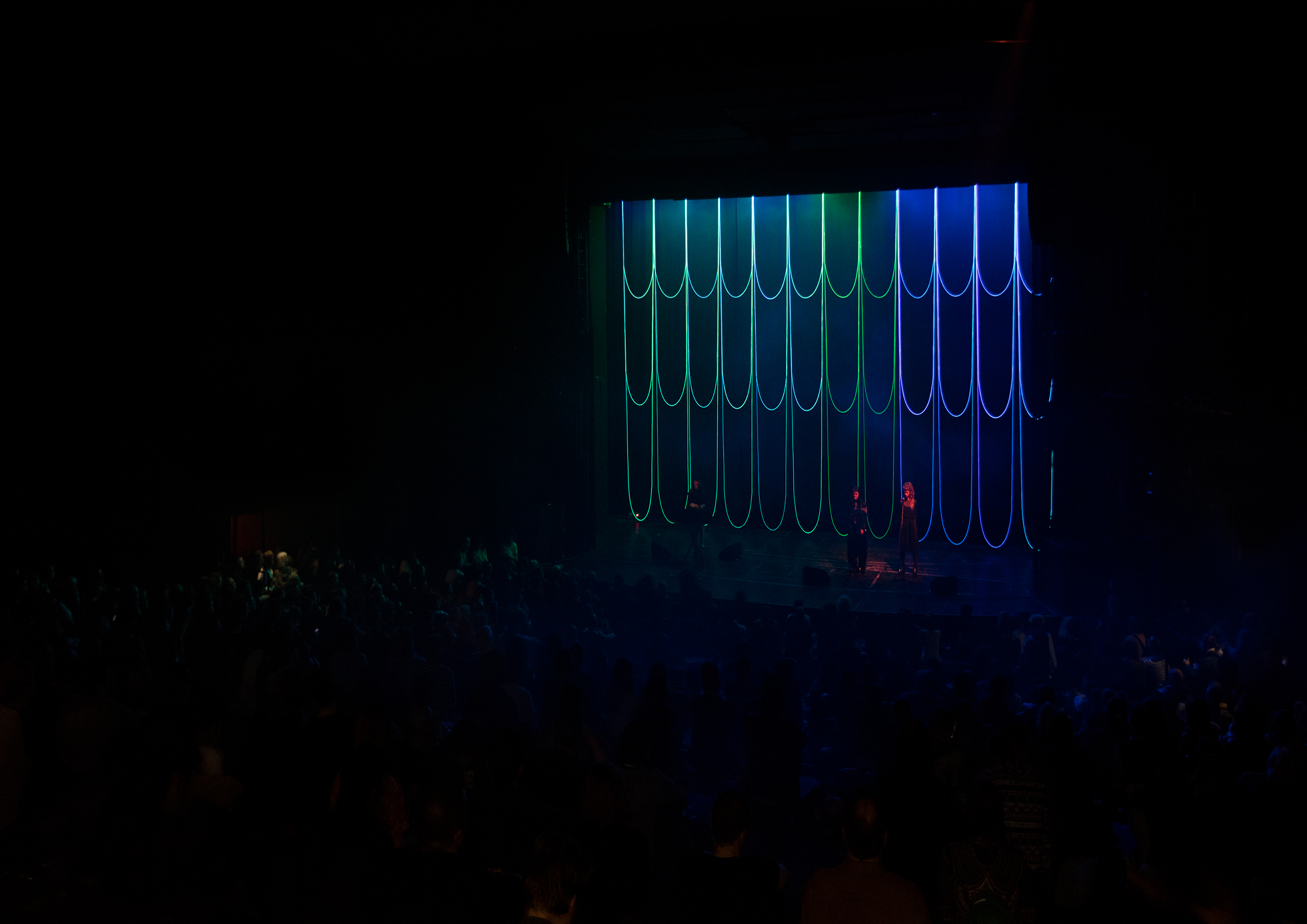
Network/ed Curtain (in collaboration with Bill kouligas) Volksbühne Berlin & Kammerspiele Munich; 2016
Drawing from the history of fiber optics, the real-time sound composition created from live router signals explores the relationship between viewer and network both audibly and visually through fiber optic lights. Alongside operatic vocalists, active wireless routers extend in space with optical fibers, creating open networks that can be manipulated and disrupted by viewers. The immersive installation creates a live visualisation of the Internet both as material and as medium, aiming to simultaneously navigate within and reimagine the given space.

Hainbuche 2015
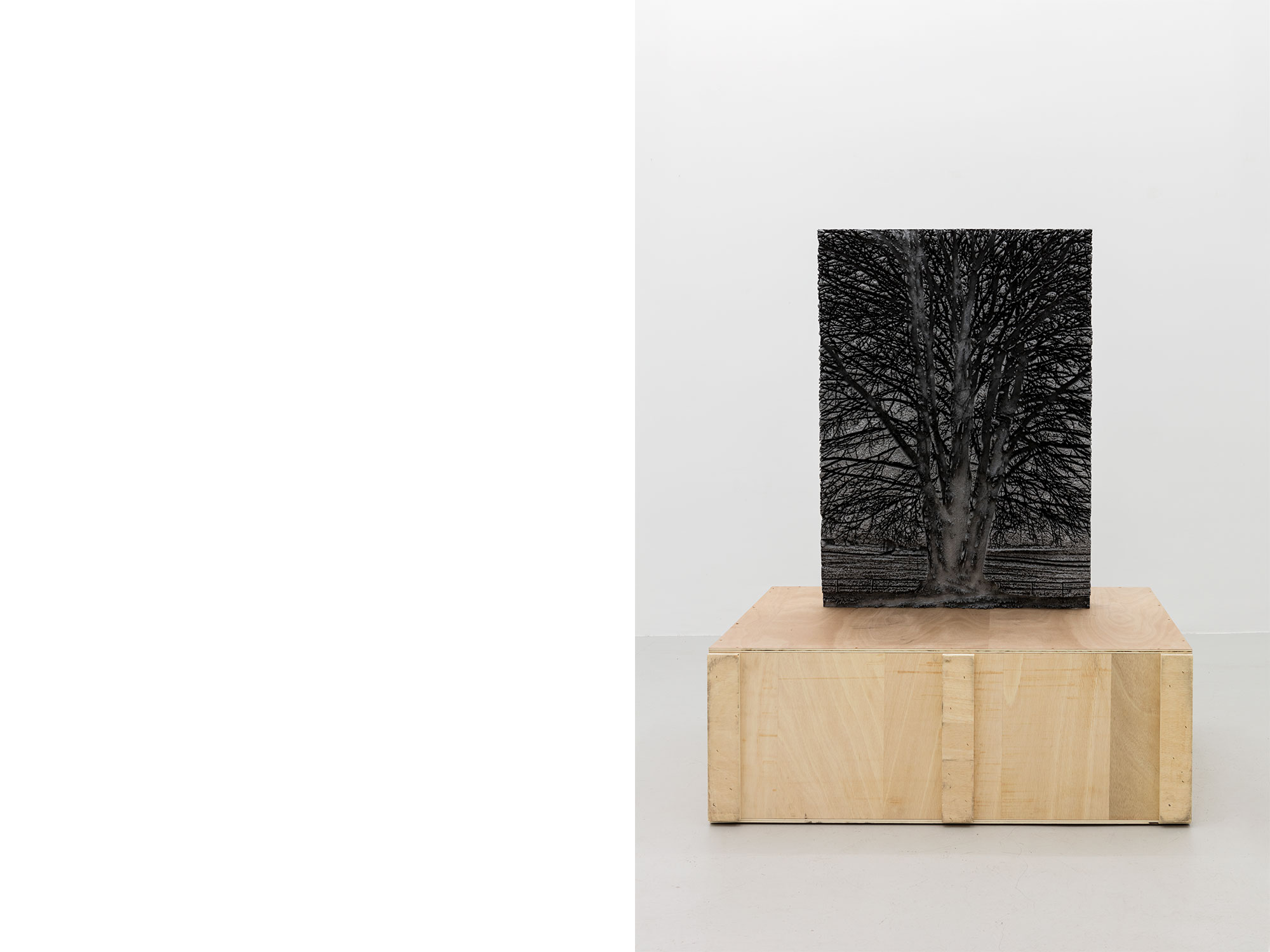
Hainbuche 2015
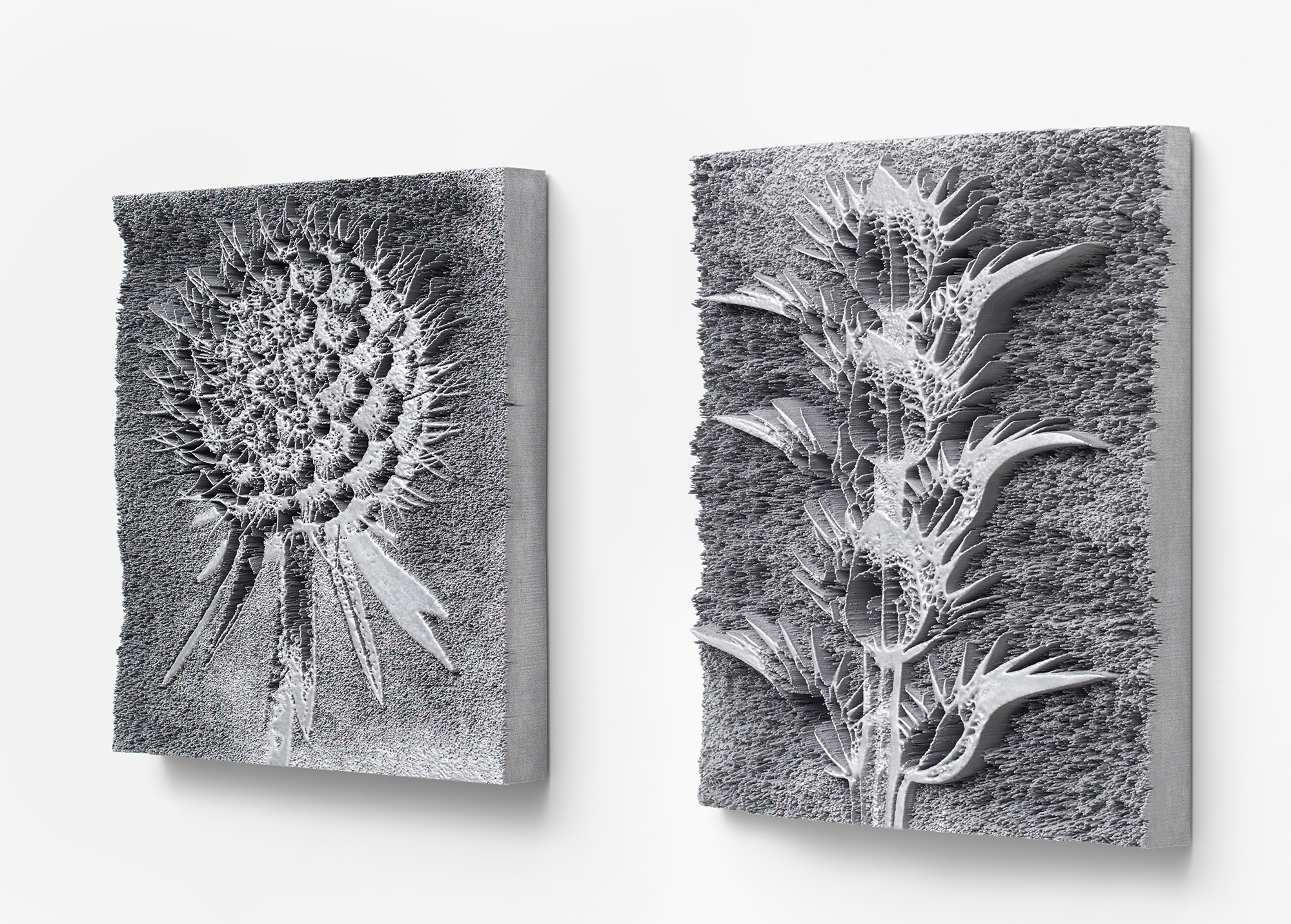
On 11 April 1906, the German teacher, sculptor and photographer Karl Blossfeldt (1875-1932) sent a letter to the Director of the Kunstgewerbemuseum in Berlin. In it he describes the time he spent in Athens at the end of the nineteenth century studying the plants of the region. He writes, ‘I also enclose a photograph of an ornament on the Erechtheion in Athens and an enlargement of the bracts of Acanthus Spinusus, which grows wild in Greece. I made these photographs myself on a field trip and I am in no doubt that these acanthus bracts were the model for the motif at top left. This classic, immaticulate example shows very clearly how small natural forms, such as diminutive acanthus bracts, were used on a greatly enlarged scale and adapted to suit to the material used.’ Blossfeldt who taught at the Kunstgewerbemuseum from 1898 onwards, had been photographing details of plants for several years. He was fascinated by their secret lives, by the way they grow and by their hidden organic structures, which often involve repetition and are almost invisible to the naked eye. He built his own camera which could make powerfully magnified images of the plants that he collected on travels to Greece, Italy and North Africa, the birthplace of classical antiquity. It was not until the end of his life that Blossfeldt’s huge archive was made public in Urformen der Kunst (1928), a book that became an instant hit and established Blossfeldt’s reputation at a stroke. Although the book was published in the early twentieth century, the work is firmly rooted in the nineteenth century, in a desire to chart the world scientifically and in great detail. The carefully isolated plant motifs are sometimes awkward, ordinary plants are held in shape with the help of needles. The untidily cut out photos on a variety of photographic papers–grey gelatine silver chloride, brown gelatine silver bromide and blueprints or cyanotypes–indicate that we are looking at a study material. The extract from Blossfeldt’s letter, along with the plant photos from his Urformen der Kunst, form the inspiration for a series of 3D alumide prints and UV prints on carbon fibre by artist Spiros Hadjidjanos. He travelled to his birthplace of Athens to carry out research in the Deutsches Archäologisches Institut. There he photographed an anonymous photo dated 1929, of the anthemion motif of the Erechtheion. Might this be the photo to which Blossfeldt refers in his letter? Might it be wrongly dated? Hadjidjanos seems to suggest so. In any case, he used this photo as the basis for his sculpture-of-a-photo-of-a-sculpture. Hadjidjanos also scanned a number of plant images from the first edition of Urformen der Kunst . With the help of computer algorithms he converted the black and white shades that give depth to the flat surface of Blossfeldt’s photos into data outlining depth. He then printed these depth maps in 3D. The darker areas of the original images recede and the lighter areas are brought forward. In his hands, the original photos become objects built of hundreds of needle-like alumide spikes that can be read as the pixels of a digital image. Hadjidjanos also used carbon fibre to create a series of two-dimensional versions of the Blossfeldt images. With the help of UV light, a colour image is printed onto the material. Seen from the side, the plant motif, now flat again, has a holographic quality. Both the connection between technological innovations from the past and present and the relationship between the manmade and the organic are important themes in Hadjidjanos’ art. Like Blossfeldt, he attempts to give shape to information that cannot be seen with the naked eye. Where Blossfeldt deployed a magnifying lens, Hadjidjanos uses cutting-edge technology that depicts invisible data generated in virtual networks. The result is an intriguing and philosophically complex oeuvre in which Blossfeldt’s botanical portraits are transformed into thoroughly contemporary, indeed futuristic, objects. - Kim Knoppers, Photography Museum Amsterdam, 2018
In a review of Karl Blossfeldt’s 1928 photography book Urformen der Kunst, Walter Benjamin marvels at the artist’s use of then-novel photographic technologies, through which “a geyser of new image-worlds hisses up . . . where we would least have thought them possible.” That unlikely site was the minute surface of plant life, whose hidden structures expanded under Blossfeldt’s magnifying camera lens. Nearly a century later, Spiros Hadjidjanos harnessed recent technologies of our own time to transform a selection of Blossfeldt’s photos into four wall-mounted works as part of Hadjidjanos’s second solo show at Future Gallery. The artist scanned first-edition prints and added depth information algorithmically, rendering the 3-D files in an aluminum-nylon composite so that the data points extrude in thin metallic shoots, forging the botanical still life into some kind of space-age sod. - Claire Lehmann, ARTFORUM, December 2014

Network Time 2011
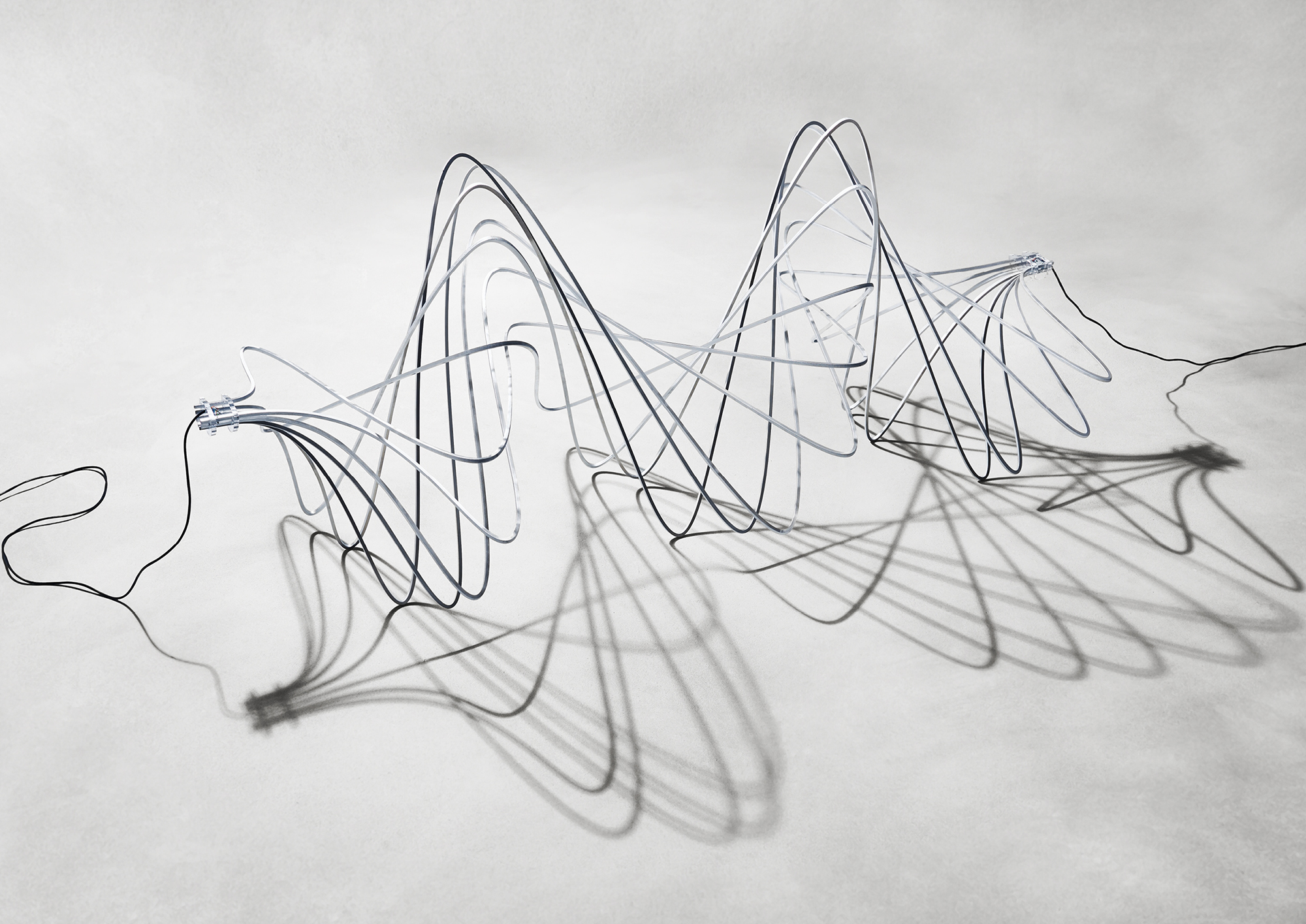
Network Sculpture 2009
Each of Spiros Hadjidjanos’ ‘Network Sculptures’ (2009-2014) is an arrangement of four pairs of curvy aluminum rods in a double helix pattern, recalling a three-dimensional diagrammatic representation of sine waves. Ethernet cables emerge from either end of each sculpture, connecting them with each other and to the gallery’s LAN (Local Area Network), which is transmitted through the rods. The cable tell us that these sculptures are more than meets the eye; they are operative conductors of digital data, processing all the information that goes through the gallery’s network during the exhibition’s time frame. They are a spatial installation of moving bits, each a time-based performance of network information. -Ory Dessau (excerpt ‘The cable Guys‘ 2014)
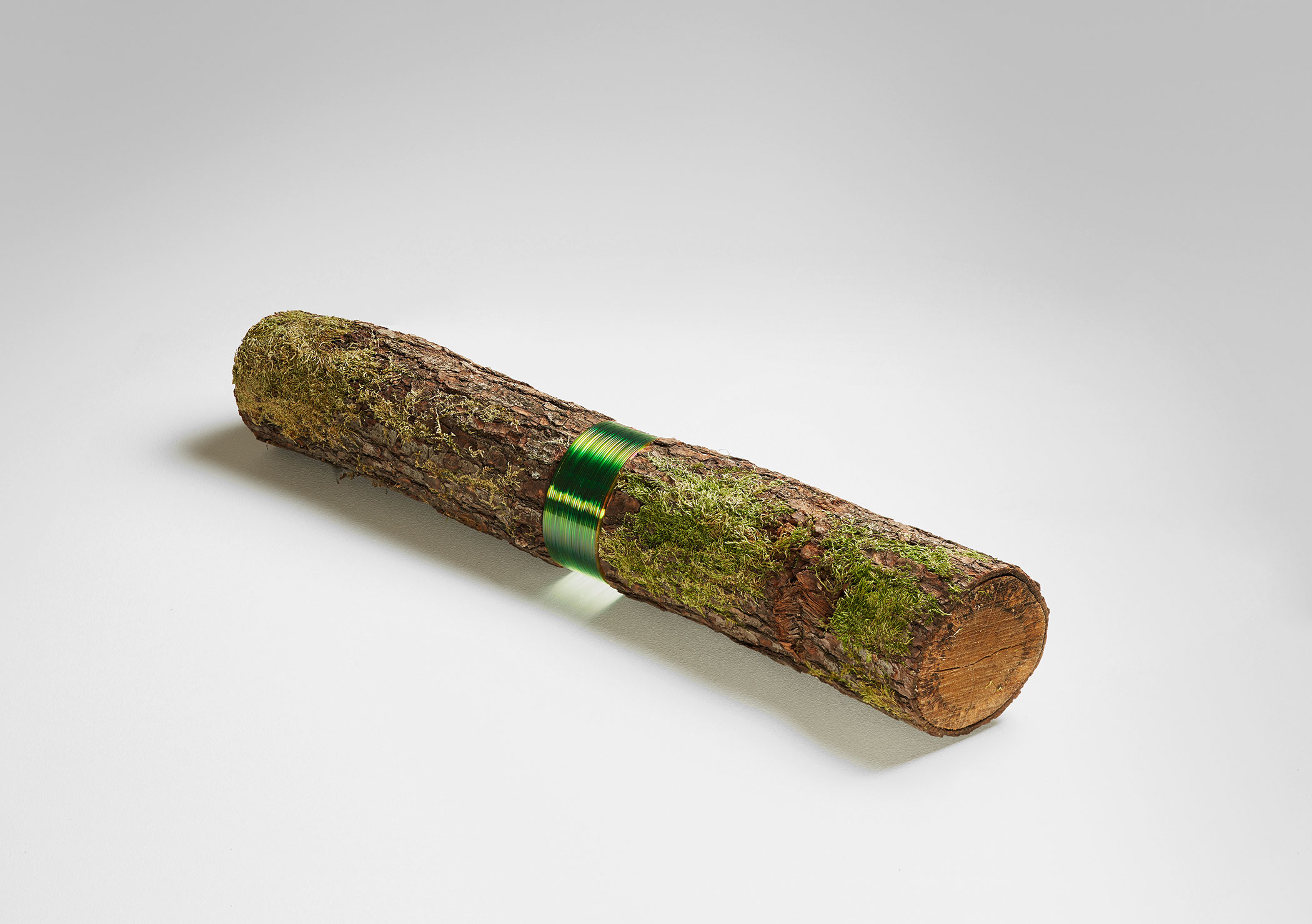
Where are the people that talk on the radio? 2008